Unlinked brand mentions are online references to your brand, products, people, or assets that do not include a link back to your website. They matter because the website has already mentioned you, which often makes them warmer link opportunities than cold outreach targets. Still, not every mention is worth pursuing. The real value comes from finding relevant mentions, checking whether a link would help readers, and prioritizing pages that can support a stronger link building workflow.
This guide explains how to find unlinked brand mentions manually, how to use SEO and monitoring tools, how to qualify each opportunity, and how to turn the right mentions into backlinks without treating every mention as an automatic win.
What Are Unlinked Brand Mentions?
Unlinked brand mentions are references to your brand on another website without a clickable hyperlink to your site. For example, if an article names your company, quotes your team, cites your report, or uses your branded visual asset but does not link to the source, that is an unlinked mention.
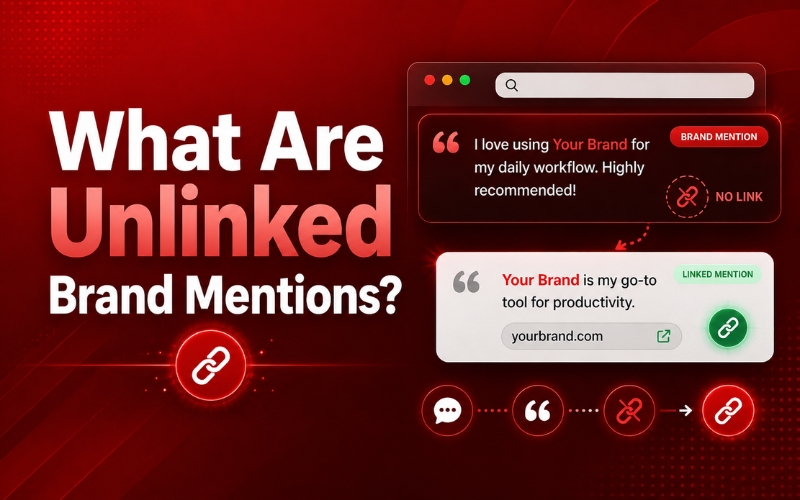
For SEO teams, these mentions are useful because they already show some level of brand recognition. The website owner, journalist, editor, or writer has already decided your brand is relevant enough to include. That does not guarantee they will add a backlink, but it creates a more natural reason to start a conversation.
The key is to treat unlinked mentions as potential opportunities, not guaranteed links. A mention on a relevant industry blog, product comparison page, news article, or resource guide may be worth outreach. A mention in a spammy directory, low-quality scraper page, or negative review may not be worth the time.
Simple Definition
An unlinked brand mention is any online mention of a brand, product, person, campaign, report, or branded asset that does not link back to the brand’s website.
The simplest example is a blog post that says “SEONetwork” in the article but does not add a hyperlink to the SEONetwork website. The same idea applies to product names, founder names, research reports, tools, templates, original images, and statistics.
This is why unlinked mention discovery should not only focus on the company name. If your brand has multiple products, public-facing people, reports, or visual assets, those can also create link opportunities.
Linked Mentions Vs. Unlinked Mentions
A linked mention includes a hyperlink to your website. An unlinked mention only references your brand in plain text.
The SEO difference is important. A linked mention can pass referral traffic, help users verify the source, and potentially support organic visibility depending on the link type and page quality. An unlinked mention can still help brand awareness, but it does not provide the same direct pathway for users or search engines to connect the mention with your website.
That is why link reclamation exists. The goal is not to force every mention into a backlink. The goal is to find cases where adding a link makes the page more useful, more complete, and easier for readers to navigate.
What Counts As A Brand Mention Worth Tracking?
Many teams only search for their exact brand name. That is a good starting point, but it is usually too narrow. Strong unlinked mention campaigns track a wider set of branded entities, including name variations, product names, people, data assets, and visual materials.
Before you search, build a short mention list. This gives your process more coverage and prevents you from missing opportunities that do not use your exact homepage brand name.
For example, a SaaS company may be mentioned by its product name more often than its company name. A consulting brand may be mentioned through its founder. A publisher or data company may earn mentions through original reports, charts, or statistics. Each of these can create a different backlink opportunity.
Brand Name And Name Variations
Start with your official brand name, then add variations. Include spacing differences, abbreviations, common misspellings, old brand names, and product-line naming patterns.
For example, a brand may be written as one word in official materials but split into two words by bloggers. It may also be shortened in forum discussions, comparison posts, or social references. These variations matter because search tools and Google operators can miss mentions if your query is too exact.
You should also check whether your brand name overlaps with a common word, location, or unrelated entity. If it does, your search queries need extra qualifiers such as industry terms, product terms, or founder names.
Product, Service, Or Feature Names
Product and service names can be stronger link opportunities than general brand mentions because they often appear in more specific contexts. A page that mentions your product may be comparing options, reviewing tools, recommending resources, or explaining a workflow.
These mentions can also help you decide which page should receive the link. A homepage link may make sense for a general brand mention, but a product mention may be better linked to a product page, documentation page, pricing page, or relevant guide.
This is especially important for companies with several services. If a publisher mentions your marketplace, advertiser solution, reporting feature, or content asset, the best link target should match the context of the sentence.
Founders, Executives, And Spokespeople
People can generate unlinked brand mentions too. Founders, executives, subject-matter experts, podcast guests, webinar speakers, and PR spokespeople are often quoted or referenced without a company link.
These opportunities are easy to overlook because they may not include the company name near the mention. A journalist may quote your founder in an article but only mention their role. A podcast recap may list a guest name without linking to the company. A conference page may include a speaker bio without linking to the brand.
When tracking people-related mentions, search for names together with role, company, topic, or event terms. Then check whether a link to the relevant author page, company page, or speaker profile would help readers verify the source.
Reports, Images, Data, And Branded Assets
Original assets are often cited without proper links. These can include research reports, infographics, charts, screenshots, templates, calculators, survey results, and branded images.
This type of mention can be valuable because the page is already using your asset as a source or reference. In many cases, asking for a source link is reasonable if the link helps readers access the original data, download the full report, or understand the context behind the visual.
For visual assets, text search is not always enough. Reverse image search can help you find pages using your images without credit. This is especially useful for brands that publish original charts, diagrams, screenshots, or research graphics.
Why Unlinked Brand Mentions Matter For SEO
Unlinked brand mentions matter because they reveal existing demand, visibility, and editorial recognition. Someone has already found your brand useful enough to reference. That makes the opportunity warmer than pitching a website that has never heard of you.
However, the SEO value depends on execution. The mention itself may support awareness, but a relevant backlink can make the reference clearer for users and easier for search engines to understand. The link also creates a direct path from the third-party page to your website.
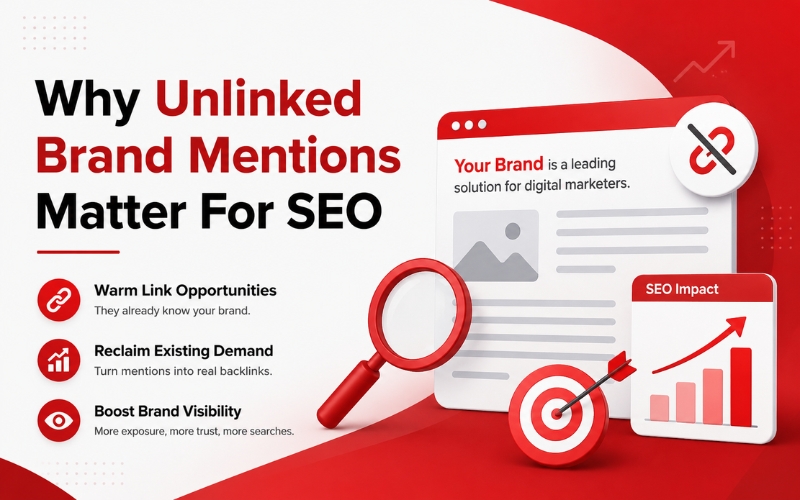
This is why unlinked mention work should be part of a broader link building strategy, not a standalone shortcut. If your team is already comparing outreach methods, digital PR, guest posting, and other tactics, it helps to understand how mention reclamation fits beside the best link building strategies for your site.
They Are Warm Link Opportunities
A cold link building pitch asks someone to care about your brand from zero. An unlinked mention pitch starts from a better position because the publisher has already mentioned you.
That changes the outreach angle. Instead of saying, “please include us,” you can say, “you mentioned us here, and adding this link may help readers find the source.” This is more relevant, more specific, and easier for an editor to evaluate.
Warm does not mean easy. The publisher may have editorial rules, nofollow policies, update limitations, or no interest in changing old articles. But compared with generic outreach, unlinked mention reclamation usually gives you a more logical reason to contact them.
They Help You Reclaim Existing Demand
Many SEO teams focus only on creating new link opportunities. They pitch new websites, build new content, and search for new placements. That work can be useful, but it often ignores demand that already exists.
Unlinked mention reclamation starts with the market signals you already have. If bloggers, journalists, partners, customers, or industry websites are already naming your brand, those references should be reviewed before your team spends more time on colder prospects.
This can be especially useful after PR campaigns, podcast appearances, product launches, data reports, or event sponsorships. These moments often create mentions across news sites, blogs, newsletters, and industry roundups, but many of them may not include links.
They Can Support Brand Visibility Beyond Links
Not every mention needs to become a backlink. Some mentions are still useful because they place your brand in relevant conversations, increase familiarity, and support trust with a specific audience.
For example, a positive mention in an industry newsletter may not pass traditional link value, but it can still drive branded search, direct visits, or assisted awareness. A forum mention may not be worth outreach, but it can reveal how people describe your product or compare your brand with alternatives.
The practical approach is to separate brand monitoring from link reclamation. Track mentions broadly, but only pursue backlinks where the context, page quality, and reader value justify the request.
How To Find Unlinked Brand Mentions Manually
Manual search is the best starting point if you want to understand the landscape before paying for tools. It helps you see where your brand appears, how people describe it, and what types of pages create the most link opportunities.
The downside is scale. Manual search can be slow, incomplete, and repetitive. Still, it is useful for smaller brands, one-off audits, or initial research before building a larger monitoring process.
Start with your exact brand name, then expand into variations, products, people, and assets. As you collect URLs, check whether the page already links to your site. Only then should you decide whether the opportunity belongs in your outreach list.
Start With Google Search Operators
Google search operators help you find pages that mention your brand while excluding your own website and common social profiles.
A simple starting query looks like this:
intext:"Your Brand" -site:yourdomain.com -site:facebook.com -site:linkedin.com -site:x.com -site:youtube.com
The intext: operator asks Google to find pages where the phrase appears in the body text. The -site: operator removes results from your own domain and other websites you do not want to review.
You can also combine your brand with industry terms:
"Your Brand" "link building"
"Your Brand" "review"
"Your Brand" "case study"
"Your Brand" "alternatives"
This helps reduce irrelevant results and surface pages where the mention is more likely to matter.
Search For Brand Variations And Misspellings
Do not rely only on your official brand spelling. Writers may add spaces, remove spaces, use abbreviations, or misspell your name.
Try queries such as:
"YourBrand" OR "Your Brand" OR "Your-Brand"
You can also search for older names, product names, feature names, and campaign names. If your company has rebranded, search both the old and new brand names. Older mentions can still be worth updating if the page is active and relevant.
For brands operating in multiple markets, include regional spelling and language variations too. This is useful when tracking international coverage or location-specific campaigns, especially if your SEO work includes regional visibility or local linkbuilding.
Use Date Filters To Find Fresh Mentions
Fresh mentions are usually easier to reclaim than old ones. If an article was published last week, the author or editor may still be actively managing it. If it was published five years ago, the page may be harder to update.
Use Google’s date filters to review mentions from the past day, week, month, or year. You can also search around specific campaign dates, product launches, conference appearances, or report releases.
A practical workflow is to check fresh mentions weekly and do a deeper historical audit quarterly. This gives you a balance between speed and coverage without turning mention tracking into a daily distraction.
Check Whether The Page Already Links To You
Finding a mention is not enough. You need to confirm whether the page already links to your website.
Open the page and search for your domain using the browser’s find function. You can also inspect links manually, use a browser extension, run the URL through an SEO tool, or crawl a list of pages with Screaming Frog.
This step prevents awkward outreach. Sometimes a page mentions your brand in one paragraph without a link but already links to you elsewhere on the same page. In that case, sending a reclamation request may look careless.
Track each result as linked, unlinked, nofollow, sponsored, broken, or unclear. This makes prioritization much easier later.
How To Find Unlinked Brand Mentions With SEO And Monitoring Tools
Manual search works, but tools make the process faster and more repeatable. SEO tools, media monitoring platforms, and brand monitoring alerts can help you find mentions across a wider index and keep track of new references over time.
The goal is not to collect as many mentions as possible. The goal is to create a cleaner pipeline of pages worth reviewing. A tool can surface the opportunity, but your team still needs to judge relevance, quality, sentiment, and link fit.
If your team is evaluating whether to build links manually, use marketplaces, or buy backlinks through a structured process, mention reclamation can sit at the front of the workflow because it starts with existing brand references.
Use Content Explorer Or Similar Web Index Tools
Content discovery tools can search across large indexes of web pages. They are useful for finding pages that mention your brand, filtering by publication date, language, traffic, domain metrics, and topic.
A typical process looks like this:
- Search for your brand name in the content database
- Exclude your own domain
- Filter out low-quality or irrelevant pages
- Export the results
- Check whether each page links to your website
- Prioritize the best opportunities for outreach
This is more efficient than clicking through Google results one by one. It also helps you find pages that may not appear in your immediate search results because of personalization, location, index differences, or query limitations.
Set Up Brand Monitoring Alerts
Unlinked mention discovery should not be a one-time audit. Brand monitoring alerts help you find new mentions as they appear.
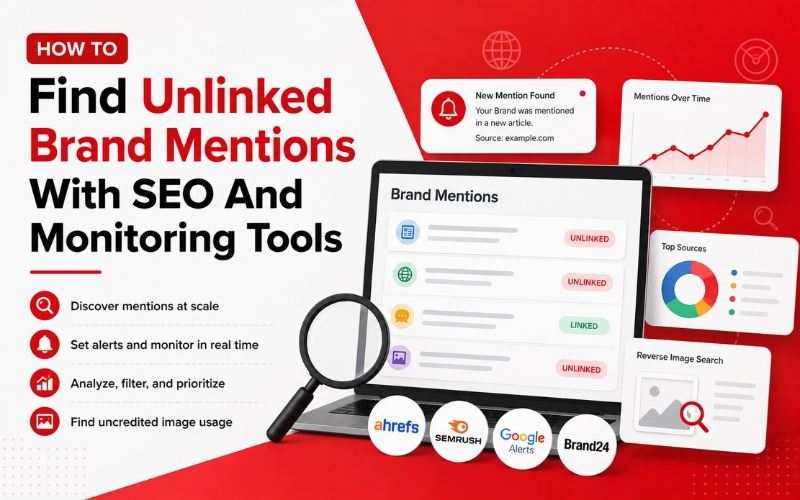
You can use tools such as Google Alerts, Ahrefs Alerts, Semrush Brand Monitoring, Brand24, Prowly, or other media monitoring platforms. The exact tool matters less than the workflow. Your alerts should cover brand names, product names, key people, reports, and important assets.
Set alerts with enough specificity to reduce noise. If your brand name is generic, pair it with industry terms. If your product name overlaps with a common phrase, add exclusions. The cleaner the alert, the easier it is to act on the results.
Track News, Blogs, Forums, And Industry Publications Separately
Different source types need different treatment. A mention in a news article is not the same as a mention in a forum thread. A product review is not the same as a scraped directory page.
Group sources into categories such as:
- News and media
- Industry blogs
- Review sites
- Partner pages
- Resource lists
- Forums and communities
- Directories
- Event pages
- Research citations
This structure helps you decide what to do next. News and blog mentions may be good outreach targets. Forum mentions may be useful for reputation monitoring but less suitable for link requests. Directories may need quality checks before you spend time on them.
Use Reverse Image Search For Uncredited Visual Assets
If your brand publishes original visuals, reverse image search can reveal pages using those assets without proper attribution.
Use this method for charts, graphs, diagrams, infographics, screenshots, logos, templates, and report visuals. Upload the image or paste the image URL into a reverse image search tool, then review the pages where it appears.
When the page uses your asset without a source link, the outreach angle is straightforward. You are not asking for a random backlink. You are asking the publisher to credit the original source so readers can verify or access the material.
This works best when the asset is clearly original and useful. Generic stock-style visuals are less likely to justify a link request.
How To Qualify Unlinked Mentions Before Outreach
Not every unlinked mention deserves an email. Qualification is what separates a useful link reclamation process from a messy list of URLs.
Before outreach, ask four questions. Is the page relevant? Is the page good enough to care about? Is the mention positive or neutral? Would adding a link improve the reader experience?
If the answer is no, skip it. Link building resources are limited, and a low-value mention can take just as much time to pursue as a strong one. Your team should protect its outreach capacity for pages that actually fit the brand, topic, and reader journey.
Check Relevance First
Relevance should come before metrics. A mention on a tightly related industry article is usually more valuable than a mention on a broad, unrelated site with a higher domain score.
Look at the page topic, surrounding text, audience, and intent. Does the page discuss your industry? Does the mention appear in a meaningful context? Would a reader reasonably want to click through to your site?
If the mention is random, thin, or disconnected from the page topic, outreach may not be worth it. A link should feel like a useful reference, not an SEO insertion.
Look At Page Quality, Not Just Domain Metrics
Domain-level metrics can help with sorting, but they should not be the only decision factor. A strong domain can still have weak pages. A smaller website can still have a high-quality, relevant article.
Review page-level signals such as:
- Is the page indexed?
- Does the page receive organic traffic?
- Is the content original?
- Is the article updated or abandoned?
- Are outbound links natural?
- Is the site overloaded with paid links?
- Does the page match your topic?
A page that passes these checks is more likely to be worth outreach. If the page looks spammy, scraped, or built mainly for outbound links, skip it.
Review Sentiment And Context
Sentiment matters. A positive or neutral mention can be a good opportunity. A negative mention requires more care.
If the page is criticizing your product, discussing a complaint, or comparing you unfavorably, asking for a link may not be the right move. In those cases, the better response may be reputation management, customer support, or no action at all.
Context also matters. If the mention appears in a list of examples, a quote, a source citation, or a product reference, a link may fit naturally. If it appears in a passing sentence with no real relevance, forcing a link can weaken the outreach request.
Decide Whether A Link Adds Value For Readers
This is the most important qualification question. Would the link help readers?
A link adds value when it helps readers:
- Visit the official brand website
- Verify a quoted source
- Download a report
- View a referenced product
- Understand a data point
- Read the original guide
- Contact the company
- See the full context behind a visual asset
If you cannot explain the reader value in one sentence, the outreach request is probably weak. Strong outreach is not built around “we want a backlink.” It is built around “this link makes your page more useful.”
How To Organize Your Unlinked Mention Opportunities
A mention list becomes hard to manage quickly. Even a small brand can find dozens or hundreds of results across Google, SEO tools, alerts, social references, and media coverage.
A simple tracking system prevents duplicate work and keeps outreach focused. It also helps you measure whether mention reclamation is worth continuing. Without tracking, you may not know how many mentions were found, how many were qualified, how many were contacted, and how many became links.
The system does not need to be complex. A clean spreadsheet is enough for most teams.
Build A Simple Tracking Sheet
Create a spreadsheet with columns that help you move from discovery to decision. Useful columns include:
- Source URL
- Page title
- Domain
- Mention text
- Mention type
- Linked or unlinked status
- Existing link target
- Suggested target URL
- Relevance score
- Page quality score
- Sentiment
- Contact name
- Contact email
- Outreach status
- Follow-up date
- Final result
This structure makes the process easier to review. It also helps avoid sending multiple emails to the same publication or asking for a link that already exists.
Group Mentions By Priority
Do not treat every mention equally. Group them into High, Medium, and Low priority.
High-priority mentions usually have strong relevance, positive or neutral context, good page quality, and a clear reason to link. Medium-priority mentions may be relevant but lower authority, older, or harder to update. Low-priority mentions may be weak, generic, outdated, or unlikely to produce value.
This keeps your team focused. If you only have time to send ten outreach emails this week, they should go to the strongest ten opportunities, not the first ten URLs in a spreadsheet.
Match Each Mention With The Right Target Page
The target page should match the context of the mention. A homepage link is not always the best choice.
If the article mentions your brand generally, the homepage may work. If it mentions a product, send the product page. If it cites your data, send the original report. If it uses your visual, send the source asset or article where the visual was published.
This makes the outreach request more credible. Editors are more likely to add a link when the target page clearly supports the sentence where the mention appears.
How To Turn Unlinked Mentions Into Backlinks
After you find and qualify the right opportunities, outreach is the next step. This part should be simple, specific, and respectful.
Your goal is not to pressure the publisher. Your goal is to make a small editorial update easy for them. Mention the exact page, point out where the brand is referenced, suggest the most relevant URL, and explain why the link helps readers.
Keep the email short. Editors and writers do not need a long explanation of your SEO strategy. They need a clear reason to update the page.
Contact The Right Person
The right contact depends on the website. For blogs, the author may be best. For media sites, an editor or corrections desk may be better. For company websites, a content manager, marketing manager, or webmaster may handle updates.
Avoid sending the same email to everyone at the organization. That can look careless and create duplicate conversations. Start with the most relevant contact, then try one backup contact if needed.
If you cannot find a direct contact, use a general editorial or website contact form, but keep the message specific to the page.
Write Outreach That Explains Reader Value
Good outreach focuses on the article and its readers. Avoid making the request sound like a pure SEO ask.
A strong message should include:
- The article URL
- The exact mention or sentence
- The suggested link
- A short reason the link helps readers
- A polite close
For example, if an article mentions your research report but does not link to it, explain that adding the source link helps readers review the full data. If a page names your product, explain that the official page gives readers accurate context.
Personalize A Short Outreach Email
A short email can still be personalized. The key is to reference the actual page and explain the link fit clearly.
Example:
Subject: Quick source suggestion for your article

Hi [Name],

I was reading your article on [Topic] and noticed you mentioned [Brand/Product] in this section: “[Mention].”

Would you consider linking that mention to the official page here?
[URL]

It may help readers find the original source and get the full context behind the reference.

Thanks,
[Name]
This works because it is direct, contextual, and easy to act on. It does not over-explain SEO, and it does not pretend the request is bigger than it is.
Follow Up Once, Then Move On
One follow-up is usually enough. If the publisher does not respond after that, move on.
A polite follow-up can be sent after several business days. Keep it shorter than the first message and avoid sounding frustrated. Editors are busy, and some websites simply do not update older content.
Tracking follow-ups also protects your brand reputation. Repeated messages for a small link request can make your outreach look spammy, even if the original opportunity was legitimate.
Common Mistakes When Finding Unlinked Brand Mentions
Unlinked mention work looks simple, but the process can become inefficient if your team chases the wrong pages or sends weak outreach. The most common mistakes come from treating every mention as equal.
A better approach is selective. Find broadly, qualify carefully, and outreach only when the link has a clear reason to exist. That keeps the workflow efficient and protects the brand’s editorial relationships.
Chasing Every Mention Instead Of The Right Mentions
Not every mention deserves outreach. Some mentions appear on low-quality websites, irrelevant pages, scraper sites, or pages that no real audience will read.
Chasing every mention wastes time and can lead to poor link decisions. Instead, prioritize mentions that are relevant, editorial, positive or neutral, and useful for readers.
A smaller number of strong opportunities is better than a large list of weak targets.
Ignoring Existing Links On The Same Page
A page may already link to your website even if one specific mention is unlinked. If you miss that, your outreach can look sloppy.
Always check the page for your domain before sending an email. Also check whether the existing link points to the right page. In some cases, the page links to your homepage but mentions a specific report or product elsewhere. Then the better request may be an updated or additional link only if it improves clarity.
Sending Outreach Without Context
Generic outreach templates are easy to spot. If your email could be sent to any website about any article, it is probably too vague.
Context makes the request stronger. Mention the article topic, the sentence where the brand appears, and the reason your suggested link helps the reader. This turns the email from a backlink request into a useful editorial suggestion.
Forgetting To Monitor New Mentions
A one-time audit is useful, but it will not catch future mentions. Brands keep getting referenced through new content, campaigns, partnerships, reviews, and discussions.
Set up ongoing alerts so new mentions enter your workflow quickly. Fresh mentions are often easier to update, and monitoring prevents link opportunities from sitting unnoticed for months.
Final Checklist For Finding Unlinked Brand Mentions
Use this checklist to keep the process clean:
- Build a list of brand names, product names, people, reports, and visual assets
- Search Google with brand operators and domain exclusions
- Search for name variations, abbreviations, and misspellings
- Use date filters to find fresh mentions
- Use SEO tools or monitoring tools to scale discovery
- Run reverse image search for original visuals and reports
- Check whether each page already links to your website
- Qualify each mention by relevance, page quality, sentiment, and reader value
- Add qualified opportunities to a tracking sheet
- Match each mention with the right target page
- Send a short, contextual outreach email
- Follow up once, then move on
- Keep alerts active for future mentions
If your team is building a broader organic visibility process, mention reclamation should also connect with an off page seo checklist and a recurring backlink gap analysis. These help you see where reclaimed mentions fit beside competitor links, content-led outreach, digital PR, and new placement opportunities.
Conclusion
Finding unlinked brand mentions is one of the most practical ways to uncover link opportunities because the brand reference already exists. The work is not just about searching for your name online. It is about finding the right mentions, checking whether they are unlinked, qualifying the page, and asking for a link only when it improves the reader experience.
The strongest process is simple: track the right branded entities, search manually and with tools, prioritize relevant pages, send contextual outreach, and monitor new mentions over time.
Once your team has reclaimed the opportunities already available, the next step is building a more structured link acquisition pipeline. SEONetwork is a link building marketplace that helps SEO teams and site owners compare placement opportunities more clearly, so link building decisions can become more organized instead of relying only on scattered manual outreach.

I’m Jackson Avery, and I have 5 years of experience in content SEO. At SEONetwork, I share practical SEO knowledge, insights, and content strategies to help readers better understand search intent, content optimization, and sustainable organic growth.