
If you are searching for how to find backlinks, you are probably not looking for raw link data just for the sake of it. You want to know where a website is getting authority, how to find competitor backlinks that may actually matter, and what to do with that information once you have it. This guide explains how to find backlinks for a website, where free research can help, what advertisers often get wrong, and how clearer backlink research can lead to better SEO decisions.
How to find backlinks and learn something useful from them
The easiest mistake in backlink research is stopping too early. Many advertisers manage to find backlinks to a site, but they do not go far enough to understand which links are worth paying attention to and which ones are just noise. If the goal is better SEO decisions, the real job is not only to collect backlinks. It is to interpret them.
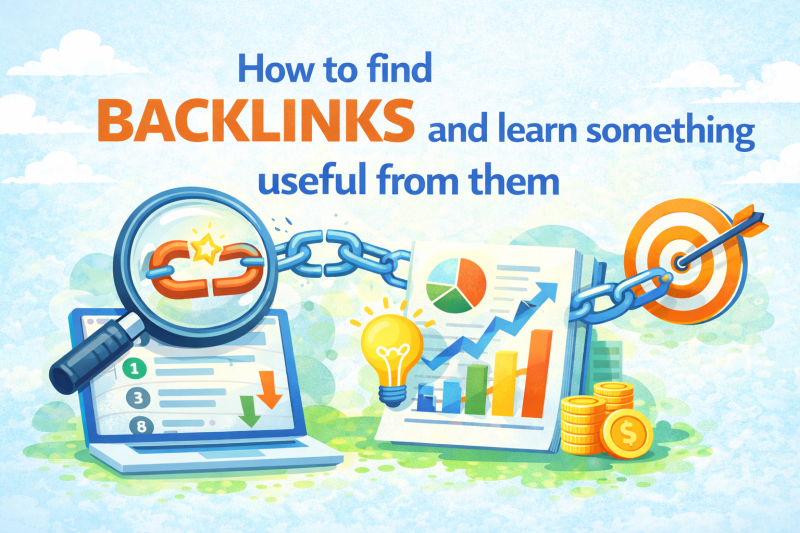
Check your own website first to understand your current backlink profile
Before you spend too much time looking outward, start with your own site. If you are wondering how to find backlinks to my website, the first step is to build a basic backlink baseline. You need to know what kind of referring domains already link to you, which pages on your site attract links, and whether your current backlink profile is stronger or weaker than you assumed.
This matters because backlink research becomes more useful when it is comparative. If you do not understand your own starting point, it is harder to judge whether a competitor is ahead because they truly have stronger link support or because their page simply matches the query better.
Even a simple review can tell you a lot. You may notice that your strongest links point to informational content while your commercial pages have very little support. You may also find that some pages with decent rankings are doing more with fewer links than expected. Those patterns help you move from vague assumptions to more grounded SEO planning.
Find competitor backlinks by reviewing pages that already rank
Once you know your baseline, shift your attention to the pages already performing well for the keywords you care about. This is the most practical way to find competitor backlinks without getting distracted by irrelevant URLs.
Instead of reviewing a competitor’s entire domain, look at the specific page that ranks for the query you want. That page is what you are really competing with. If you want to learn how to find backlinks for a website in a way that helps your strategy, page-level research is usually more useful than broad domain-level curiosity.
This is also where the question becomes more specific. You are no longer asking only how to find backlinks. You are asking which backlinks appear to support a page that is already winning in the SERP. That shift leads to better judgment, because not every backlink in a competitor profile deserves your attention.
Look at referring domains, linking pages, and anchor context
When people try to find backlinks, they often focus only on counts. That is not enough. The more useful view includes the referring domain, the linking page, and the context around the anchor.
A backlink from a relevant article on a site that makes sense in your niche often tells you more than a generic metric ever will. The surrounding content matters. The type of page matters. Even the way the link is introduced matters. A natural contextual mention inside a useful article usually tells a very different story from a weak link placed on a page with little editorial value.
This is why how to find backlinks to a site should not be treated as a purely technical question. You are not just hunting URLs. You are trying to understand why those URLs may be helping.
Identify backlink patterns that may actually support rankings
Once you review enough linking pages, patterns start to appear. You may notice that several ranking pages earn links from industry blogs, guest contributions, list-style content, or resource pages within the same topical space. You may also notice that some competitors have many links that look impressive in volume but not especially useful in context.
This is where backlink research becomes strategic. You stop asking whether a competitor has more backlinks than you do and start asking which kinds of backlinks seem to show up repeatedly around strong pages. Repetition matters because it can reveal what the SERP responds to, at least directionally.
A useful pattern may look like this: several top-ranking pages in your niche are supported by links from relevant sites that discuss adjacent topics and place links naturally within editorial content. That tells you more than a random backlink export ever could.
Turn what you find into a practical shortlist
Research becomes valuable only when it helps you decide what to do next. After you find backlinks and review patterns, create a shortlist of opportunities that look realistic, relevant, and worth further evaluation.
This shortlist should not be a copy-paste of every competitor link you found. It should be a filtered list based on fit. Which sites seem topically aligned? Which placements look editorially credible? Which link opportunities appear realistic for your page and keyword? That is where backlink research starts becoming actionable instead of interesting but incomplete.
Can you find backlinks for free, and what are the limits?
Many advertisers want to find backlinks free before investing in more structured research. That makes sense. Free methods can be useful early on, especially when you are trying to understand a niche, review a few competitors, or confirm that a page is attracting real support.
What free backlink research can show you
At a basic level, free backlink research can help you spot backlink presence, identify a few referring domains, and get an early feel for who is linking to whom. It can also help you check whether your own site appears to have some link activity if your first question is how to find backlinks to my website without paying for advanced tooling right away.
For advertisers at the early research stage, this can be enough to answer simple questions. Are competitors earning links from relevant sites? Do the pages ranking above you seem supported by backlinks at all? Are there obvious domains that appear repeatedly? Free methods can often surface those first clues.
What free methods usually miss
The problem is depth. Free checks rarely give you the full picture, and they often make comparison harder than it needs to be. You may see a small sample of backlinks without enough context to understand which ones matter most. You may also struggle to compare competitors at the page level in a consistent way.
That limitation becomes more serious when the research moves from curiosity to planning. It is one thing to find backlinks on Google or through basic free tools. It is another thing to evaluate whether those backlinks are relevant, repeatable, or useful enough to influence campaign decisions.
This is why many advertisers outgrow free methods quickly. The issue is not that free research is useless. It is that it usually stops being sufficient once you need clarity, scale, and structured comparison.
When free backlink checks stop being enough
Free methods tend to break down when you need more than surface-level insight. If you are trying to build a serious shortlist, compare several competitors, or decide where to invest budget, incomplete backlink data becomes a real problem.
That is the turning point. Find backlinks free can work as a starting point, but not always as the basis for good decision-making. Once the goal shifts from discovery to action, you need a more disciplined way to assess what you are seeing.
Common mistakes advertisers make when trying to find backlinks
Backlink research seems straightforward at first, but it is surprisingly easy to interpret the wrong signals. Many advertisers gather a large amount of link data and still end up with weak conclusions because they focus on the wrong things.
Focusing on volume instead of relevance
This is one of the most common mistakes. A competitor may have hundreds of backlinks pointing to a page, but that number alone does not tell you whether those links are useful, relevant, or worth learning from.
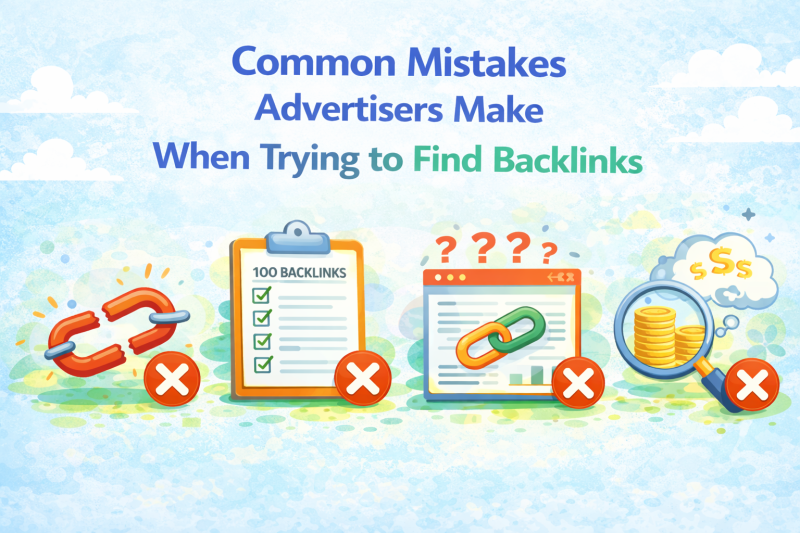
A smaller group of relevant backlinks from credible, contextually aligned sites may matter more than a long list of weak placements. If you try to find backlinks and judge them only by volume, you may end up chasing patterns that look big rather than patterns that actually support rankings.
Copying competitor backlinks too literally
It is tempting to think that if a link helped a competitor, you should try to get the same one. Sometimes that logic works. Often it does not.
A backlink only makes sense in context. The page being linked to, the article surrounding the link, the topical fit, and the broader strength of the site all influence whether that backlink is worth pursuing. Copying competitor links too literally can lead to a scattered strategy built on imitation rather than judgment.
A better approach is to study competitor backlinks for patterns, not to treat every single one as a template.
Assuming every backlink has the same value
Backlinks do not operate as interchangeable units. Some support authority. Some reinforce topical relevance. Some may drive referral value. Some are barely worth recording.
This is why learning how to find backlinks to a site should always lead into the next question: which of these links seem meaningful enough to affect performance? If you skip that question, backlink research easily becomes a long list of URLs with no real strategic value.
Collecting backlink data without a clear SEO goal
Another common mistake is doing backlink research without knowing what the research is meant to support. Are you trying to rank a commercial landing page? Strengthen a blog article? Close a competitive gap for a specific keyword? Build authority around a topic cluster?
Without a clear goal, it becomes harder to decide what kind of backlink opportunities even matter. The more specific the page and ranking objective, the easier it becomes to separate useful backlinks from distractions.
How SEONetwork helps advertisers research backlinks more clearly
Once advertisers move from exploration to decision-making, the biggest challenge is often not whether they can find backlinks. It is whether they can evaluate what they find in a clear and practical way.
Why structure matters in backlink research
Backlink research gets messy fast when data is scattered across too many sources and too many one-off decisions. You may identify interesting placements, but without structure it becomes difficult to compare them, prioritize them, and connect them back to the page goals you are actually trying to support.
For advertisers, this matters because backlink research should not end with a spreadsheet full of possibilities. It should lead toward clearer decisions about fit, quality, and next steps.
How clearer comparison leads to better placement decisions
The more clearly you can compare backlink opportunities, the less likely you are to make decisions based only on price, familiarity, or surface-level metrics. Structured comparison helps you look at relevance, context, editorial fit, and how well a placement aligns with the page you are trying to support.
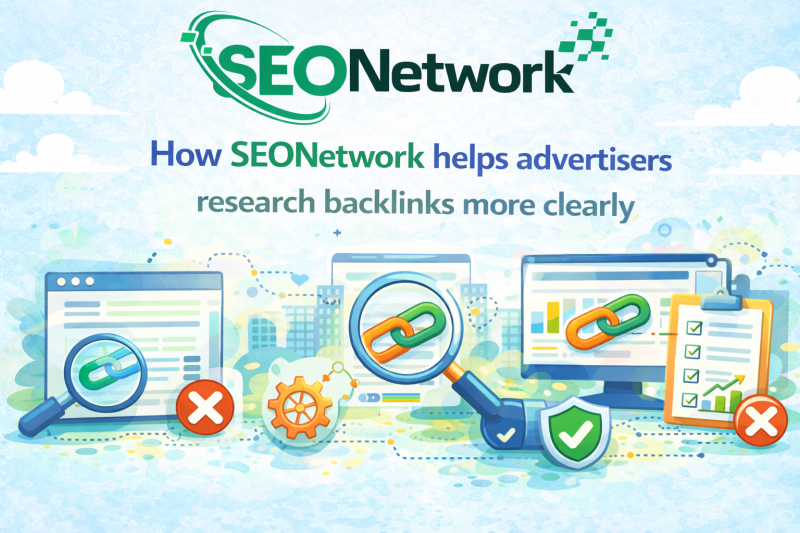
That is usually where better outcomes begin. It is not just about finding more backlinks. It is about understanding which opportunities deserve real attention.
Where SEONetwork fits once advertisers move from research to action
At SEONetwork, we think the handoff between backlink research and placement decision-making is where many advertisers lose clarity. They may know how to find backlinks, and they may even know how to find competitor backlinks, but translating that research into a more organized next step is often harder than it sounds.
That is where SEONetwork fits more naturally. Rather than treating backlink discovery and placement evaluation as completely separate efforts, advertisers can move from research into a more structured comparison process. The goal is not to force action too early. It is to make the next step clearer once you already know what kinds of backlink opportunities you want to evaluate.
If you already understand how to find backlinks for a website but want a more practical way to assess which opportunities deserve attention, that is where a more structured environment becomes useful.
Backlink research is most valuable when it helps you make better decisions, not just gather more data. If your next step is comparing real placement options with more clarity, SEONetwork can help make that transition feel less fragmented.
FAQ
Backlink research usually leads to a few practical questions. These are the ones advertisers tend to ask most often once they move from curiosity to action.
How to find backlinks to my website?
Start by reviewing your existing backlink profile through whatever tools or methods you have access to. Look at which pages already attract links, which referring domains show up repeatedly, and whether those links are relevant to your niche. The goal is to establish a baseline before comparing your site against competitors.
How to find backlinks to a site?
The most useful approach is to review the specific page or domain you care about, then examine referring domains, linking pages, and anchor context. If you want better SEO insight, do not stop at the backlink list itself. Look at what those links may be doing for the page.
How to find competitor backlinks?
Focus on competitor pages that already rank for your target keywords. Review the backlinks pointing to those pages, then look for patterns in referring domains, link placement context, and topical relevance. That usually reveals more than looking at a competitor’s domain in the abstract.
Can I find backlinks for free?
Yes, you can often find backlinks for free at a basic level. Free methods are useful for early discovery and surface-level checks, especially if you want to find backlinks on Google or verify whether a page has visible link support. The limitation is that free research usually lacks the depth and consistency needed for serious planning.
What should I do after I find backlink opportunities?
Do not move straight from discovery to action without filtering. Review relevance, editorial quality, topical fit, and how well the opportunity matches your page goal. The best next step is usually not to pursue everything you found, but to narrow the list to the opportunities that make the most sense for your SEO objectives.
If you are learning how to find backlinks, the real value is not in collecting the biggest possible list. It is in understanding which links matter, which patterns are worth paying attention to, and which opportunities are actually relevant to your page and keyword. Once you can do that, backlink research becomes much more than a reporting exercise. It becomes a clearer path toward better SEO decisions.
You May Also Like:
Buy Backlinks for SEO: What to Check Before You Buy
How to Create Backlinks That Actually Move The Needle in 2026
How Many Backlinks Do I Need to Rank?

I’m Jackson Avery, and I have 5 years of experience in content SEO. At SEONetwork, I share practical SEO knowledge, insights, and content strategies to help readers better understand search intent, content optimization, and sustainable organic growth.