SEO optimization is not a one-time task. It is a set of systematic actions across multiple areas that need to be maintained and refined over time.
This guide walks through each step on how to do SEO optimization, in order: keyword research, on-page, technical, off-page, and measuring results. It is useful whether you are doing the work yourself or want to understand the process before working with an SEO service.
What does SEO optimization actually involve?
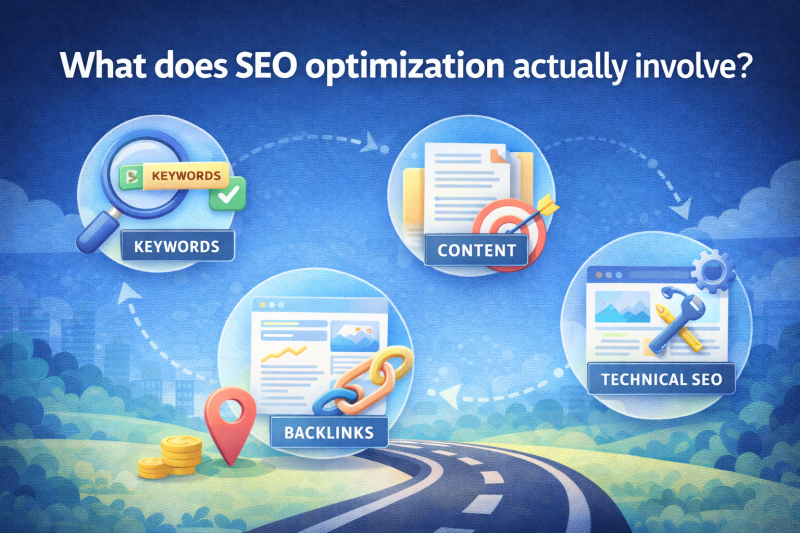
SEO optimization covers three core areas, and all three need to work together for sustainable results.
- On-page SEO: Optimising content, heading structure, title tags, meta descriptions, and internal linking directly on each page.
- Technical SEO: Making sure search engines can crawl, index, and correctly understand your website. This includes page speed, URL structure, structured data, and mobile-friendliness.
- Off-page SEO: Building signals from outside your website, primarily through backlinks from relevant and authoritative sources.
A common mistake is focusing on just one area, usually on-page, and wondering why results do not follow. The three areas reinforce each other. Strong on-page work will not get far if technical issues prevent proper indexing. Good content struggles to compete in high-competition niches without off-page authority behind it.
A search engine optimizer with real experience is someone who knows how to coordinate all three areas, prioritise correctly at each stage, and adapt based on where the site actually stands.
Start with keyword research and search intent
Before optimising anything, you need to know what you are optimising for and who you are optimising for. That is why keyword research comes first.
The most common mistake at this stage is selecting keywords based on volume while ignoring search intent. A keyword with 10,000 monthly searches has no value if the intent behind it does not match what your page delivers.
Search intent falls into four main categories:
- Informational: The user wants to learn something. Requires explanatory, educational content.
- Navigational: The user is looking for a specific brand or website.
- Commercial: The user is comparing options before making a decision.
- Transactional: The user is ready to take action or make a purchase.
Once you have identified your target keywords and their intent, map each keyword to the right landing page. Each page should target a specific intent group. Avoid having two pages on the same site competing for the same keyword, as this creates cannibalisation issues that hurt both pages.
>>> DIVE DEEPER: How to Learn SEO: A Practical Roadmap for Beginners – SEONetwork
On-page SEO optimization
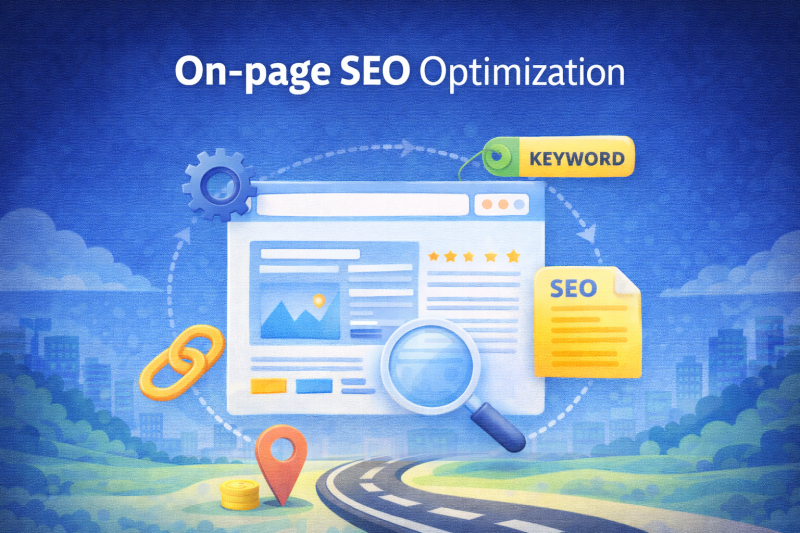
On-page is the area you have full control over, and where most of the optimisation work happens in the early stages.
Title tag
The title tag has a direct influence on rankings. Keep it under 60 characters, include the primary keyword, and write it in a way that earns clicks, not just rankings. A high-ranking title with a low CTR still sends a negative signal.
Meta description
Not a direct ranking factor, but it influences CTR. Write the meta description as an invitation to click, answering the question “what will this page do for me” in around 150 to 160 characters.
Heading structure
The H1 should clearly communicate the topic of the page and appear only once. H2 and H3 headings create a logical structure for the content, not an opportunity to stuff keywords. Readers scan headings before reading, so each heading needs to communicate what its section actually covers.
Content
Content needs to answer the query thoroughly enough that someone searching that keyword does not need to go back and look elsewhere. That does not mean writing the longest article possible. Avoid repeating the same points across different sections. Prioritise practical insight over textbook definitions.
Internal linking
Link to related pages within the same site naturally within the content. Internal linking helps crawlers discover new pages, distributes link equity across the site, and keeps users engaged longer. Anchor text should accurately describe the content of the page being linked to.
URLs and images
Keep URLs short, descriptive, and include the primary keyword where it fits naturally. Images need descriptive alt text that accurately reflects the content, which helps both accessibility and image search visibility.
>>> READ MORE: What Is SEO Visibility? Meaning, Measurement, and How to Improve It
Technical SEO optimization
Technical SEO is the foundation. If search engines cannot crawl or index your site correctly, all on-page work is wasted.
Core Web Vitals and page speed
Google uses Core Web Vitals as ranking signals. The three metrics to focus on are LCP (how fast the main content loads), INP (how responsive the page is to interaction), and CLS (how stable the layout is during load). A slow page hurts both rankings and bounce rate.
Crawlability
Review your robots.txt to make sure important pages are not accidentally blocked. Audit noindex tags and use them only where genuinely needed. Submit an XML sitemap through Google Search Console to support the crawl process.
Mobile-first indexing
Google indexes the mobile version of your site first. If the mobile version is missing content or has a different structure compared to desktop, that is a priority issue to fix.
Structured data
Structured data helps Google understand exactly what type of content a page contains, which can unlock rich results such as star ratings, FAQs, and other enhanced formats in search. Schema.org is the standard reference for implementation.
When technical should come before on-page
If your site has serious crawl errors, very slow load times, or a significant number of important pages not being indexed, fix those first. Optimising content on a page that is not indexed is effort with no return.
Off-page SEO optimization
Off-page SEO is primarily about backlinks. They remain one of the most significant ranking signals, though how Google evaluates link quality has become increasingly sophisticated.
Three factors that determine the value of a backlink:
- Relevance: A link from a topically related site carries more weight than a link from a generic site, regardless of that site’s overall authority.
- Authority: Links from established, trusted sites with a strong content history pass more value.
- Context: A link placed naturally within relevant content, with appropriate anchor text, is more valuable than a footer link or an unrelated directory listing.
Common implementation approaches:
- Guest posting: Writing content for another website in exchange for a backlink. Effective when you select the right publisher and invest in content that genuinely adds value.
- Niche placements: Securing backlinks on pages that are directly relevant to your topic area.
- Digital PR: Creating content that is strong enough to earn links naturally from journalists, publications, and authoritative blogs.
For teams managing link building at scale, manual outreach becomes time-consuming and hard to keep consistent. SEONetwork is a platform that brings more structure to this process, connecting advertisers with publishers in a transparent and organised way compared to traditional outreach.
>>> EXPLORE FURTHER: Buy Backlinks, Buy Guest Posts & Backlink Services | SEONetwork
SEO optimization tools worth using
You do not need every tool available. Choose based on your current stage and what you actually need.
Free tools that are sufficient for getting started:
- Google Search Console: Tracks indexing status, coverage issues, Core Web Vitals, and query-level data. Non-negotiable from day one.
- Google PageSpeed Insights: Page-level speed diagnostics and CWV breakdown.
- Ahrefs Webmaster Tools: Keyword and backlink data for your own site, free.
- Screaming Frog SEO Spider (free tier): Crawl up to 500 URLs to find broken links, redirect chains, missing tags, and other on-site issues.
- Google Keyword Planner: Basic volume data for early-stage keyword research.
Paid tools worth considering when you need more depth and scale:
- Ahrefs or Semrush: Comprehensive keyword research, competitor analysis, backlink auditing, and rank tracking.
- Surfer SEO: On-page content optimisation based on live SERP data, useful when optimising content at volume.
- Screaming Frog (paid): Unlimited URL crawling with Google Search Console and GA4 integration.
Paid tools deliver clear value when you are managing multiple sites, need detailed competitive data, or want to save significant research time. For learning and early-stage practice, the free tier tools are enough.
When to use SEO optimization services
Not everyone needs to hire an SEO service. And hiring without knowing what you need often leads to poor outcomes and wasted budget.
You can handle it yourself when:
- The site is small with a straightforward structure.
- You have time to learn and practice consistently.
- The niche is not heavily competitive.
- You want full control over the process and have the capacity to manage it.
Consider working with a search engine optimizer or agency when:
- The site is large or has complex technical issues beyond your current capability.
- You need results faster in a competitive niche and cannot afford the learning curve.
- You do not have the bandwidth to do it properly in-house.
- You need a full strategy, not just execution of individual tasks.
What to clarify before signing any service agreement:
- Which specific deliverables are included and how success is measured.
- Reporting frequency and what the reports will actually contain.
- Avoid any provider that guarantees a specific ranking position or promises results within an unrealistically short timeframe. SEO does not work that way, and those claims are a reliable signal to walk away.
How to measure SEO optimization results
Optimising without measuring means you cannot tell whether you are moving in the right direction.
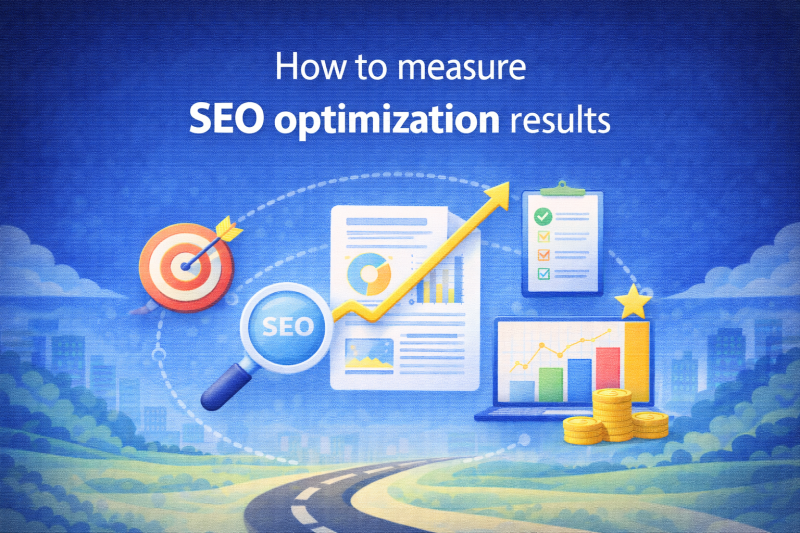
Metrics to track consistently:
- Organic traffic: Visits from search engines, tracked through GA4.
- Impressions and CTR: Tracked through Google Search Console. Shows where your pages are appearing and whether users are clicking.
- Average position: Average ranking for your target keywords.
- Indexed pages: Number of pages Google has indexed. Helps surface crawl or noindex issues early.
- Core Web Vitals: Monitor through Search Console to catch pages with speed or stability problems.
Realistic expectations on timing:
SEO takes time. For a new site or recently optimised pages, it typically takes three to six months to see meaningful movement in rankings and traffic. That is not a reason to stop working during that window. Continue optimising, publishing content, and reading the signals you have available.
When to review your strategy:
- After any major Google algorithm update.
- When traffic drops unexpectedly or rankings for important pages shift significantly.
- On a quarterly basis, to reassess target keywords, content performance, and new opportunities.
>>> DIVE DEEPER: How Long Does It Take for SEO to Work? A Realistic Timeline
Where to start
Effective SEO optimization happens when the different areas work together, not when each task is done in isolation.
The order to follow: keyword research, on-page, technical, off-page, then measure and adjust continuously. Each step does not need to be perfect before moving to the next, but it needs to be solid enough to build on.
When you reach the off-page stage and want a more structured approach to managing placements rather than relying on manual outreach, SEONetwork is worth exploring as a platform built specifically for that part of the process.
Check our SEO Marketplace for Baclinks for the most balance and safest link building strategies.

I’m Jackson Avery, and I have 5 years of experience in content SEO. At SEONetwork, I share practical SEO knowledge, insights, and content strategies to help readers better understand search intent, content optimization, and sustainable organic growth.