
How long does it take for backlinks to work? Backlinks rarely affect rankings immediately. In most cases, it takes several weeks to several months before they contribute to clearer SEO movement, and some links do very little if the page or surrounding conditions are weak. The timeline depends on crawl frequency, indexation, link quality, page strength, competition, and how ready the destination page is to benefit. This guide explains what has to happen before a backlink can matter, what usually speeds the process up or slows it down, and how to tell whether a new link is actually helping.
The Short Answer: How Long Backlinks Usually Take To Work
The short answer is that backlinks often take several weeks to several months to show a clearer effect.
That does not mean every good link needs months before it matters. Some links can support rankings sooner, especially when the linking page gets crawled quickly, and the destination page is already strong. But there is no universal timeline that applies across every site, keyword set, or link type.
A backlink only starts to matter once Google can discover it, process it, understand the surrounding context, and decide that the signal is worth trusting. That is why the timing varies so much. A strong, relevant backlink pointing to a page that is already close to ranking behaves very differently from a weak, low-context link pointing to a thin page in a competitive SERP.
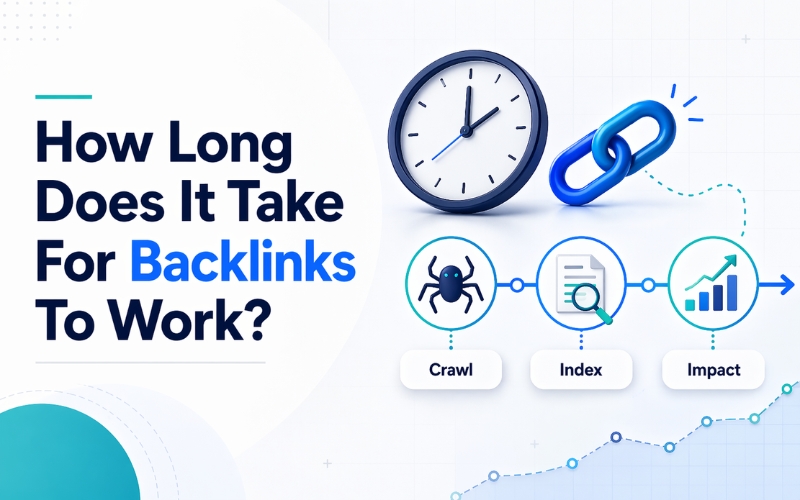
So if you are asking how long backlinks take to work, the most realistic answer is this: they need enough time for Google to find the link, evaluate the context, and connect that signal to a page that is actually capable of benefiting from it.
>>> EXPLORE FURTHER: Buy Backlinks, Buy Guest Posts & Backlink Services | SEONetwork
What Has To Happen Before A Backlink Can Matter
Before a backlink can influence rankings, several things need to happen first. This is where expectations often become unrealistic.
The Link Has To Be Discovered
Google cannot evaluate a backlink it has not found.
If the linking page sits on an active site that gets crawled frequently, discovery may happen relatively quickly. If the page is buried deep on a weak site, poorly linked internally, or rarely revisited, discovery can take longer. This is one reason links from well-maintained sites often appear to work faster.
The Linking Page Has To Be Processed Properly
A link existing on a page is not enough by itself. Google still has to understand that page.
If the linking page is low quality, difficult to crawl, weakly structured, or poorly indexed, the backlink may not create much meaningful value. Google is also evaluating more than the raw presence of the link. It is interpreting the page, the surrounding content, and the relationship between the source and the destination.
The Destination Page Has To Be Worth Strengthening
A backlink does not rescue every weak page.
If the destination page has poor intent fit, thin content, weak internal support, or low topical credibility, even a good backlink may not create obvious movement. In many cases, the limiting factor is not the link. It is the page itself.
This is one of the biggest reasons teams think backlinks are not working when the real issue is that the target page was never in a strong enough position to benefit clearly.
The Main Variables That Change The Timeline
If you want a realistic answer to how long backlinks take to work, you need to look at the variables that actually affect the timing.
Link Quality And Relevance
A relevant backlink usually has a better chance of creating a meaningful signal than a random one.
When the source site, linking page, anchor text, and target page all fit together well, Google has a clearer reason to treat the link as useful. Weakly relevant or low-context links often take longer to show any effect, or they do very little at all.
Source-Site Credibility And Crawl Activity
A link from a credible site that gets crawled regularly often has a better chance of being processed sooner.
This does not mean authority alone guarantees speed. It means stronger sites usually create better conditions for faster discovery, clearer interpretation, and more trustworthy context.
Competition In The SERP
The more competitive the keyword set, the harder it is to see obvious movement quickly.
If a page is competing against strong sites with established topical authority and better link profiles, one or two new backlinks may not create noticeable ranking gains right away. In weaker SERPs, the same link may be enough to move the page more clearly.
Target-Page Strength
A strong page often responds to backlinks faster than a weak one.
If the content is solid, the page already has some impressions, the internal linking is good, and the search intent match is clear, backlinks can reinforce a signal that is already forming. If the page is underdeveloped, the same link may appear to do very little.
Link Placement And Context
Not all backlinks are placed equally.
A contextual in-content backlink usually sends a stronger and clearer signal than a low-visibility footer link, a generic profile link, or a weak directory placement. Better placement context often leads to better outcomes because the link feels more editorially justified.
Overall Site Conditions
Pages do not operate in isolation.
A site with healthy crawl behavior, stronger internal linking, clearer topical clusters, and better overall trust often absorbs backlink signals differently from a site with weak structure and inconsistent quality. This is one reason two similar-looking backlinks can produce very different outcomes.
>>> READ MORE: How Many Backlinks Do I Need to Rank?
A Realistic SEO Timeline For Evaluating New Backlinks
A more useful way to judge backlinks is to think in evaluation windows rather than expect instant feedback.
In The First 2 To 4 Weeks
Focus on discovery and indexation.
At this stage, the main questions are whether the linking page is live, indexable, and likely to be crawled. You may see small fluctuations in impressions or rankings, but it is usually too early to draw strong conclusions.
In The First 1 To 3 Months
This is often where clearer patterns start to appear.
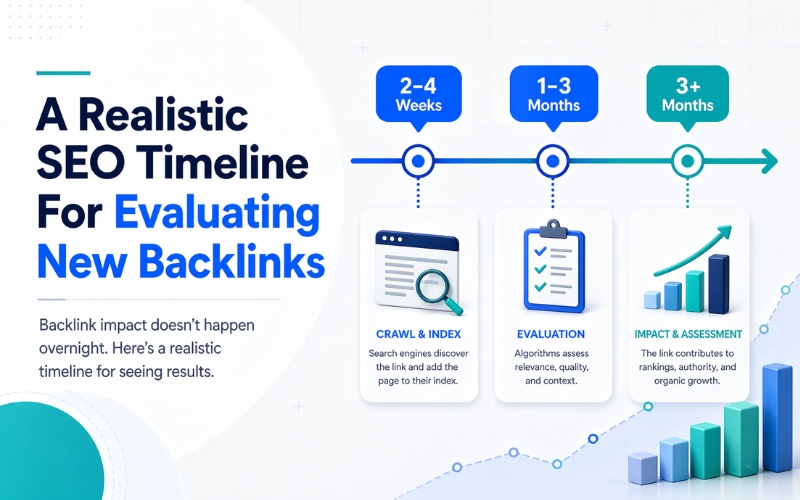
If the backlink is relevant and the target page is strong enough, you may begin to see better keyword coverage, improved average positions, or stronger ranking stability. For many SEO teams, this is the most useful evaluation window.
After 3 Months And Beyond
If there is still no meaningful sign of improvement, it is worth looking deeper.
Reassess the link quality, the target-page quality, the internal linking, the competition level, and the overall fit of the opportunity. Sometimes the answer is that the backlink was weak. In other cases, the page was never strong enough to benefit clearly in the first place.
Why Some Backlinks Seem To Work Faster
Backlinks usually work faster when the surrounding conditions are already favorable.
That often includes:
- a linking page that gets crawled frequently
- a source site with stronger editorial credibility
- a target page that is already ranking or getting impressions
- solid internal linking and topical support
- a SERP that is not dominated by much stronger incumbents
In other words, backlinks tend to move faster when they are reinforcing an existing signal rather than trying to create one from nothing.
This is one reason page-two pages often respond more visibly than pages that are still weak, thin, or misaligned with search intent. The page was already within range. The backlink just helped strengthen what was already there.
Why Some Backlinks Stall Or Do Very Little
Some backlinks take longer, not because Google is unusually slow, but because the setup is weak.
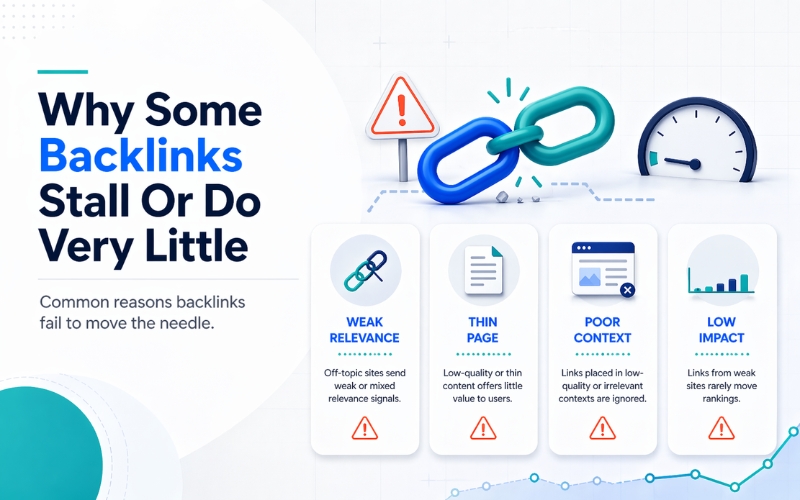
That often happens when:
- The backlink comes from a low-quality or weakly relevant page
- The target page does not match the search intent well
- The page is thin or underdeveloped
- Internal linking is weak
- The SERP is highly competitive
- The site lacks enough topical support around the page
This is a useful distinction because it changes the diagnosis. Waiting longer does not automatically turn a weak link into a strong one. In some cases, the backlink did not fail because more time was needed. It failed because the opportunity was weak from the start.
How To Tell Whether A Backlink Is Actually Helping
One reason backlink timing gets misunderstood is that people often look for the wrong signs.
Look For Trends, Not One-Day Jumps
Daily rank movement is noisy.
If you want to know whether a backlink is helping, look for steadier page-level changes across several weeks. A meaningful signal is usually easier to spot over time than through one-day jumps or drops.
Use Search Console And Page-Level Visibility Data
Useful indicators include:
- growth in impressions
- improved average position
- stronger keyword coverage
- better stability for target queries
- visibility gains for related terms
These signals usually tell you more than one isolated rank check.
Compare Against Other Changes
Do not assume every improvement came from the backlink alone.
If the page was updated, internal links changed, other links went live, or the SERP shifted, multiple variables may be involved. Good evaluation means separating correlation from causation as much as possible.
Evaluate Links As Part Of A Pattern
Sometimes backlinks work cumulatively.
A single link may not move a page enough to be obvious, but several relevant links over time can strengthen the overall signal meaningfully. This is why link impact often makes more sense when reviewed as part of a broader pattern rather than as one isolated event.
A Simple Practical Example
Imagine two new backlinks go live in the same week.
Link A comes from a decent-looking site, but the article is only loosely related to the topic, the page is not especially strong, and the target page on your site is thin and not ranking yet.
Link B comes from a clearly relevant industry page that gets crawled often, and it points to a destination page that already has impressions, good internal support, and a strong intent match.
In many real SEO situations, Link B is more likely to show a visible effect sooner. Not because Google processed it magically faster, but because the surrounding setup gave the backlink a better chance to matter.
This is the practical mistake many teams make. They compare links by surface value and ignore the readiness of the page receiving the signal.
Common Mistakes In Backlink Timing Expectations
A lot of frustration in link building comes from weak timing assumptions.
Expecting Immediate Ranking Gains
Backlinks are not instant triggers. Some movement can happen quickly, but expecting strong ranking gains within a few days usually leads to bad conclusions.
Judging A Link Too Early
If the page has barely been crawled or indexed, it is too early to decide whether the link worked. Many teams label a link ineffective before the evaluation window was even realistic.
Assuming Every Indexed Link Will Matter
Indexation is only one part of the story.
A link can be indexed and still add very little if the relevance, quality, or page context is weak.
Blaming The Link When The Page Is The Problem
This is one of the most expensive mistakes in link building. Teams often blame the backlink when the destination page is thin, misaligned, or not ready to compete.
Confusing Correlation With Causation
A ranking jump after a link does not always mean the link caused it. The reverse is also true. No immediate jump does not automatically mean the link had no value.
What To Prioritize Instead Of Chasing Speed
Speed matters, but it is rarely the best thing to optimize for.
What usually matters more is:
- whether the backlink truly fits the topic
- whether the target page deserves stronger signals
- whether the site structure can support the page
- whether the opportunity is strong enough to matter in context
A fast but weak backlink is less useful than a slower, stronger placement that genuinely fits the page and topic. This is why better long-term link building usually comes from better judgment, not faster expectations.
The goal is not to find links that seem to work overnight. The goal is to build links that support rankings in a more durable and believable way.
How SEONetwork Helps Teams Judge Link Impact More Clearly
One reason backlink timing gets misread is that many teams judge links too early or too emotionally. They look for a fast rank jump, do not see one, and assume the placement failed.
In practice, clearer evaluation comes from comparing relevance, placement context, and target-page fit before expecting obvious movement. As a backlink marketplace, SEONetwork helps advertisers and publishers compare placement opportunities in a more structured way, which makes link impact easier to judge over a more realistic timeframe.
Conclusion
In most cases, backlinks need several weeks to several months before their effect becomes easier to judge. But timing is only part of the story. The more useful question is whether the link, the page, and the surrounding site conditions are strong enough for the signal to matter at all.
If your team wants better outcomes from link building, the real upgrade is not faster expectations. It is better judgment about which links are worth building and which pages are actually ready to benefit.
Check our Link Building Marketplace for the most balance and safest link building strategies.
FAQ
How Long Does It Take For Backlinks To Work?
Backlinks often take a few weeks to a few months to show a clearer SEO effect. The exact timing depends on crawl speed, link quality, page strength, competition, and how ready the destination page is to benefit.
Can Backlinks Work In A Few Days?
Sometimes small signals can appear quickly, especially if the linking page is crawled fast and the destination page is already strong. But clear ranking impact within a few days is not something teams should expect routinely.
Why Do Some Backlinks Take Longer Than Others?
Some backlinks take longer because the source page is crawled less often, the linking context is weaker, the destination page is not strong enough, or the keyword competition is higher.
How Do You Know If A Backlink Is Helping Rankings?
Look for page-level movement over time, not just day-to-day fluctuations. Search Console impressions, average position trends, and broader keyword visibility usually provide a clearer picture than one isolated rank check.
What Should You Do If A Backlink Does Not Seem To Work?
First, check whether the link was likely crawled and whether the source page is indexable. Then review the backlink quality, the strength of the target page, the internal linking, and the competitiveness of the SERP before deciding the link has no value.
>>> YOU MAY ALSO LIKE:
- Best Link Building Quality vs Quantity: What Matters More for SEO?
- Off Page SEO Checklist: What To Review, Build, And Improve – SEONetwork

I’m Jackson Avery, and I have 5 years of experience in content SEO. At SEONetwork, I share practical SEO knowledge, insights, and content strategies to help readers better understand search intent, content optimization, and sustainable organic growth.