
Link building trends are shifting away from volume-led tactics and toward strategies built on authority, relevance, visibility, and process quality. Links still matter, but the standard is higher than it was a few years ago because teams now have to think about editorial trust, brand mentions, AI visibility, and the quality of the workflow behind every placement. This article breaks down the biggest link-building trends shaping current SEO, what still works despite the shift, and how teams should adapt their strategy without chasing every new idea at once.
The Short Answer: What The Biggest Link Building Trends Actually Are
The biggest link building trend is not that links stopped mattering. It is that teams are being pushed to earn and evaluate authority more carefully.
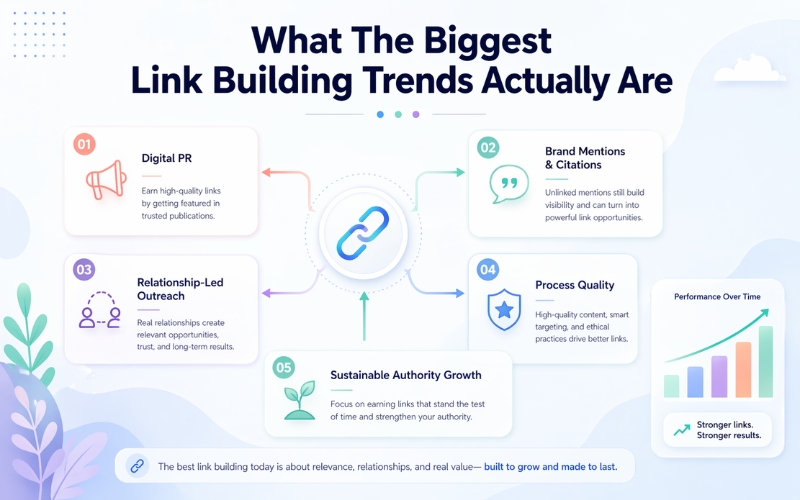
That shift shows up in several ways at once. More teams are treating digital PR as part of core link acquisition rather than a separate specialty. Brand mentions and citation visibility are being taken more seriously alongside traditional backlinks. Relationship-led outreach is replacing weaker transaction-led habits. Page-level link support is getting more attention, especially for commercial URLs. And process quality is becoming a bigger differentiator because many teams still struggle with tactic selection, reporting, and repeatability.
In other words, the market is not changing only because new tactics have appeared. It is changing because the standard for what counts as a defensible, useful authority signal has become much higher.
Why Link Building Trends Are Changing
Search visibility is now broader than traditional blue-link rankings alone. Teams are being forced to think about how authority appears across organic search, brand mentions, AI-generated answers, publishe r references, and broader visibility signals.
At the same time, older transaction-led tactics have become harder to defend. Weak paid guest posts, casual link exchanges, and templated outreach may still produce activity, but they rarely produce the kind of placements that hold up well under closer review. The issue is not just compliance risk. It is that these tactics often create weak page fit, weak editorial context, and weak long-term value.
There is also a process shift happening in parallel. Many SEO teams still struggle to identify which tactics deserve investment, how to report the value of link building clearly, and how to repeat what works without lowering standards. That pressure is pushing the market toward workflows that are easier to justify, compare, and manage. In practice, link building trends are changing because the market now demands better judgment, not just more output.
Digital PR Is Becoming A Core Authority Channel
One of the clearest link building trends is that digital PR is moving closer to the center of off-page strategy.
The reason is straightforward. Digital PR does more than generate links. It can also create visibility, brand mentions, publisher trust, media coverage, and stronger citation signals across the wider search environment. That makes it harder to treat as something separate from core authority-building work.
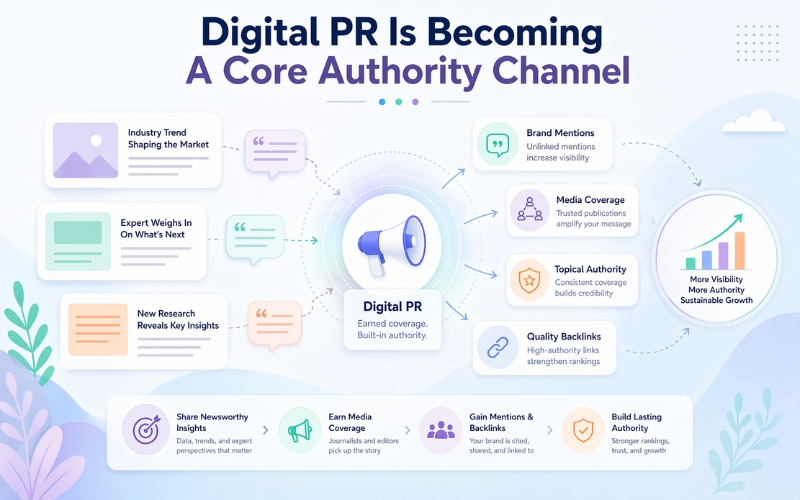
For many teams, digital PR now fills a gap that traditional outreach alone cannot fill. It is useful when a brand has something worth talking about, such as original data, a strong story angle, expert commentary, or a meaningful announcement. In those situations, the upside is not limited to one placement or one report. The campaign can reinforce visibility in multiple ways at once.
This does not mean digital PR replaces every other acquisition method. It means it is becoming harder to build a modern link strategy without giving it a bigger role.
Brand Mentions And Citation Visibility Matter More Than Before
Another important shift is that links are no longer the only off-page signal teams are watching.
Brand mentions, publisher references, and citation visibility are becoming more central because authority is increasingly interpreted through more than one layer. Teams that still evaluate visibility using only backlinks and domain metrics are working with a narrower model than the search environment itself.
This matters for two reasons. First, mentions from credible sources can strengthen awareness and trust even when they do not function like traditional backlinks. Second, AI-assisted search surfaces seem to reward broader authority patterns, not just link counts in isolation. That makes brand presence, publisher reputation, and contextual mention quality harder to ignore.
The practical takeaway is not to stop caring about backlinks. It is to stop treating links and mentions as completely separate worlds. In current SEO, they often reinforce the same authority story.
Relationship-Led Link Building Is Replacing Easy Transactions
One of the healthiest link building trends is the move away from easy transactions and toward relationship-led acquisition.
That does not mean every campaign has to be relationship-driven in a soft or brand-heavy sense. It means the strongest placements increasingly depend on real fit: fit between the publisher and the topic, between the page and the audience, and between the outreach reason and the editorial decision.
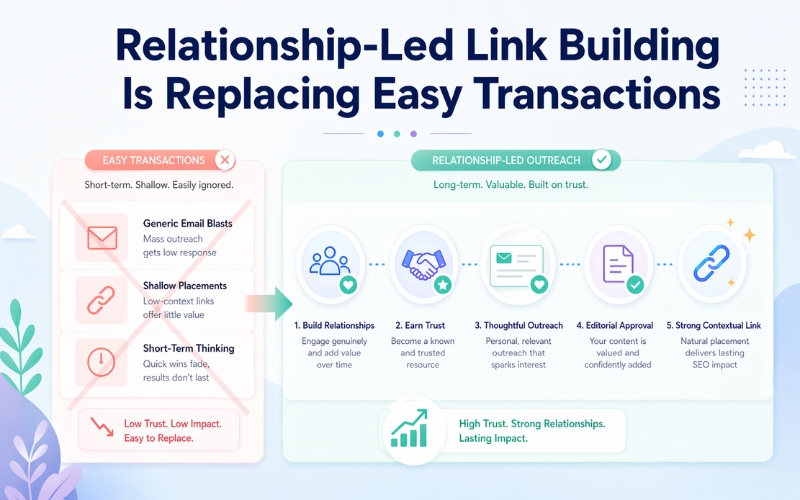
This is why manual outreach still works in the right situations, but not in the older volume-first form. The more a campaign depends on generic emails, easy publisher access, and weakly relevant sites, the more likely it is to produce links that look acceptable in a spreadsheet but do very little for real visibility.
Relationship-led acquisition tends to create cleaner placements because the source, context, and destination page fit are harder to fake. That makes the resulting links more defensible and usually more useful over time.
Page-Level Support Is Becoming More Important
A lot of link building still defaults to blog content because those pages are easier to pitch, easier to reference, and easier to place links into. But one of the more practical link building trends is the growing recognition that commercial and high-value pages need better support too.
That does not mean teams should force links directly into every product or category page. It means they need a clearer answer to a simple question: are links mostly going to the pages that are easiest to promote, or to the pages that matter most for organic growth?
For many businesses, the off-page gap is not total link volume. It is the mismatch between where links are going and where stronger visibility is actually needed. That may mean building supporting assets around commercial topics, earning links to resource pages that strengthen a conversion path, or improving how authority flows into high-value URLs.
The important shift is that page-level strategy is getting more attention. Teams are becoming less satisfied with awareness-only link building when the business needs stronger support closer to revenue-driving pages.
Process Quality Is Becoming A Real Competitive Advantage
A lot of link building advice still centers on tactics. In practice, one of the strongest long-term advantages now comes from process quality.
Teams that document how they qualify sites, compare placements, review page fit, track outcomes, and refine tactics tend to make better decisions than teams that simply chase new ideas. That is because weak process creates weak strategy selection. It becomes harder to prove value, harder to repeat what works, and harder to stop wasting time on noisy tactics.
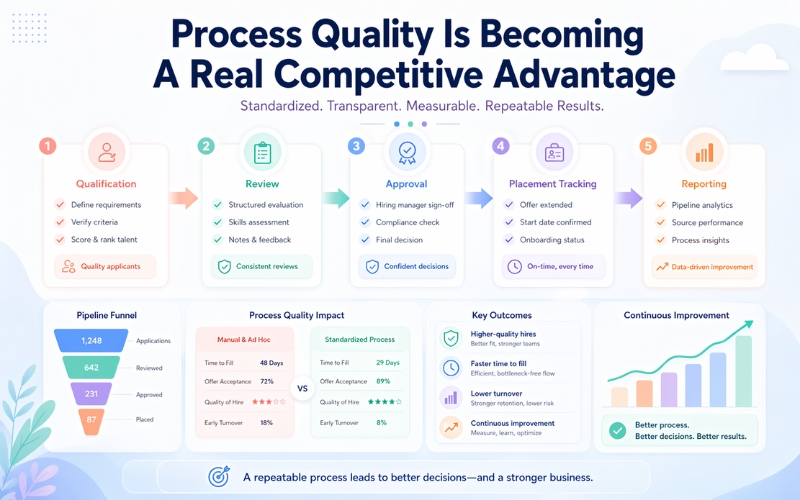
This is one reason two teams can use similar tactics and get very different outcomes. The difference is not always the tactic itself. It is often the review standard behind it.
Modern link building is becoming less forgiving of messy execution. As expectations around reporting, budget, and visibility rise, teams that build cleaner workflows gain a real advantage over teams that stay stuck in reactive, spreadsheet-heavy habits.
Budgets Still Exist, But The Burden Of Proof Is Higher
Link building has not lost budget interest. What changed is the expectation attached to that budget.
More teams still want to invest in authority-building work, but they are also under greater pressure to explain why the spend makes sense. That means link building is being judged less by broad promises and more by placement quality, reporting clarity, strategic fit, and visible business alignment.
In practice, this changes how campaigns are pitched and managed. Higher spending now needs clearer reasoning behind it. Teams need to show why certain opportunities deserve investment, why one workflow is more defensible than another, and how the link-building model supports real visibility rather than just link count.
This trend is healthy. It pushes the market away from vague volume-based selling and toward stronger decision-making.
>>> EXPLORE FURTHER: Buy Backlinks, Buy Guest Posts & Backlink Services | SEONetwork
What Still Works Despite All The Change
Amid all the discussion about AI visibility and changing authority signals, some fundamentals have not changed.
Relevant editorial links still work. Useful linkable assets still work. Strong page-level fit still works. When a credible source links to a page that deserves support, the signal still matters.
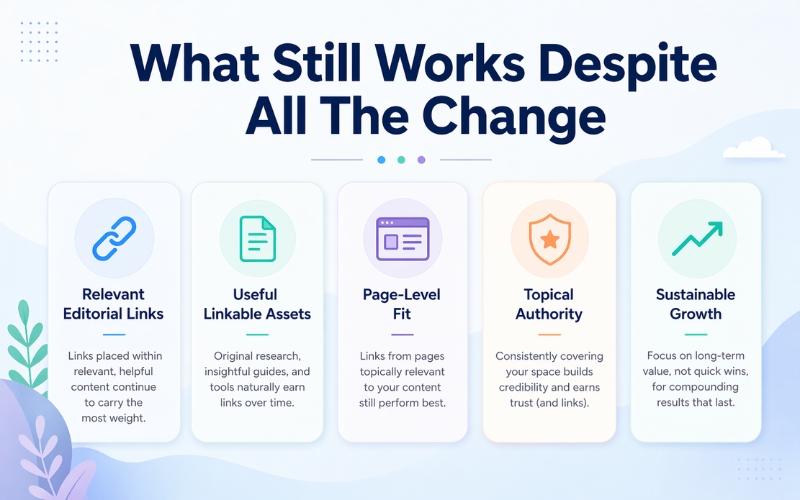
What also still works is building assets that are easier to reference in the first place. Research, original insights, tools, expert contributions, and genuinely useful resources remain much easier to support with off-page acquisition than thin pages built mainly to host keywords.
The core principle is still familiar: the cleaner the relationship between source page, anchor, destination page, and user value, the easier it is for the placement to make sense. That part of link building has not become obsolete. The market has simply become less tolerant of everything that ignores it.
What Teams Should Stop Doing
Some link building habits are becoming harder and harder to defend.
Teams should stop paying for weak placements simply because the sites are available. Easy guest post inventory, weak contextual relevance, and low-quality editorial environments often create activity without building meaningful authority.
Teams should also stop treating link building as separate from brand visibility. Once mentions, citations, and off-page reputation start affecting discovery more broadly, a campaign that chases only links can become strategically incomplete.
Finally, teams should stop measuring success only by link count. That approach is getting weaker because budget pressure, quality expectations, and visibility complexity are all increasing at the same time. A better standard looks at fit, authority, usefulness, and broader visibility impact, not just how many links were secured in a month.
How To Adapt Your Link Building Strategy To These Trends
The first step is to rebuild your quality standard. If your internal definition of a good link still depends mostly on DR, volume, or availability, it is probably behind the market. Relevance, editorial fit, publisher trust, page-level support, and visibility impact all need to be part of the decision.
The second step is to diversify beyond one acquisition method. A healthier mix may include digital PR, selective manual outreach, brand-mention monitoring, resource promotion, and stronger asset development rather than relying on a single template-driven workflow.
The third step is to improve process and reporting. Teams need clearer standards for how placements are compared, why certain opportunities are approved, and how off-page work is tied back to visibility and business goals.
In practical terms, adapting to current link building trends means doing fewer weak things more intentionally and more strong things with better judgment.
>>> EXPLORE FURTHER: Off Page SEO Checklist: What To Review, Build, And Improve – SEONetwork
Where SEONetwork Fits In A More Structured Link Building Workflow
One of the clearest link building trends right now is that process quality matters more than before. Teams need to compare placements better, qualify opportunities more consistently, and explain why certain links deserve execution.
That is where SEONetwork fits naturally. As a backlink marketplace, SEONetwork helps advertisers and publishers compare placement opportunities in a clearer, more structured way than scattered manual workflows alone. For teams adapting to newer link building trends, that kind of structure helps keep relevance, clarity, and execution aligned without turning every campaign into spreadsheet-heavy guesswork.
Conclusion
Link building trends are changing because the market is rewarding stronger judgment, not just more activity.
Digital PR, brand mentions, citation visibility, relationship-led outreach, page-level support, and better process quality are becoming more central, while weak transactional shortcuts are becoming harder to defend. What still works is still familiar: relevant editorial links, useful assets, and cleaner page-level fit.
The real shift is not that link building became unrecognizable. It is that teams now need a broader and more disciplined standard for deciding what deserves effort in the first place.
Check our Link Building Marketplace for the most balance and safest link building strategies.
FAQ
What Are The Biggest Link Building Trends Right Now?
The biggest trends include stronger use of digital PR, greater attention to brand mentions and citations, more relationship-led outreach, better page-level link support, and more pressure on process quality and reporting.
Is Digital PR Replacing Traditional Link Building?
Not entirely. It is becoming more central because it helps teams earn authoritative links, coverage, and mentions, but it works best as part of a broader authority-building strategy rather than a full replacement for every other acquisition method.
Do Brand Mentions Matter More Than Backlinks Now?
Brand mentions matter more than many teams expected, especially in broader visibility and citation contexts, but that does not mean backlinks stopped mattering. It means authority is now being interpreted through a wider set of signals.
Are Guest Posts Still Effective For Link Building?
They can still work when the placement is relevant and editorially credible, but low-quality paid guest post environments are increasingly weak and hard to defend.
How Should Teams Adapt Their Link Building Strategy?
Teams should rebuild their quality standard, rely less on transactional tactics, diversify acquisition methods, improve process and reporting, and evaluate links, mentions, and visibility signals as part of the same broader authority strategy.

I’m Jackson Avery, and I have 5 years of experience in content SEO. At SEONetwork, I share practical SEO knowledge, insights, and content strategies to help readers better understand search intent, content optimization, and sustainable organic growth.