
Do nofollow links help SEO? At SEONetwork, we often see teams judge links too narrowly. The short answer to whether nofollow links help SEO is yes, they can still help, but usually not in the same direct way as strong followed editorial links.
Google treats nofollow, ugc, and sponsored as hints in Search rather than absolute directives, which means nofollow links are not worthless. At the same time, they should not be treated as the core of a ranking-first link strategy.
What Is a Nofollow Link?
A nofollow link is a link marked with rel="nofollow". Google says this value can be used when other rel values do not apply and you would rather Google not associate your site with, or crawl the linked page from, your site.
That is the practical answer to both what a nofollow link is and what nofollow means. It does not remove the link from the page. It qualifies the link so search engines understand it should not be treated like a normal, unqualified editorial link. Google also recommends using rel="sponsored" for paid links and rel="ugc" for user-generated links, while noting that it nofollow is still acceptable in some of those situations.
The Direct Answer: Do Nofollow Links Help SEO?
Yes, but the kind of help matters.
If you mean “Do nofollow links pass value in the same straightforward way people usually expect from followed backlinks?” the answer is usually no. Google introduced nofollow so those links would not be counted in the same way as normal editorial links, and later updated its systems so nofollow would be treated as a hint rather than a strict directive. That is an important difference, but it still does not turn nofollow into the same thing as a standard followed backlink.
If you mean “Should I ignore nofollow links completely?” the answer is also no. Because Google treats nofollow as a hint, some nofollow links may still be considered in Search. Beyond that, nofollow links can still help in practical SEO terms when they improve visibility, drive relevant referral traffic, support brand presence, or put your content in front of people who may later link to it elsewhere. Google’s documentation directly supports the first part; the second part is a practical SEO inference about how exposure and discovery work in real campaigns.
>>> READ MORE: Buy Backlinks, Buy Guest Posts & Backlink Services | SEONetwork
Why the Old “Nofollow Is Useless” View Is Outdated
A lot of teams still think in absolute terms: followed links are good, nofollow links are bad, and that is the whole story. That view is too simple for how Google currently describes link qualifiers.
In 2019, Google announced that nofollow, sponsored, and ugc would be treated as hints for Search. That change matters because it means nofollow is no longer best understood as a hard on-or-off switch. Google still says links marked this way will generally not be followed, but it no longer frames nofollow as something that must always be ignored in Search.
That does not mean nofollow links suddenly became equal to followed links. It means the modern SEO view has to be more precise. A nofollow link may not be your strongest direct ranking asset, but it is also not automatically worthless.
How Google Treats Nofollow Today
The safest working interpretation is this: nofollow reduces certainty, not necessarily all value.
Google’s current documentation says that it uses links as a signal to discover content and to help determine which pages may be relevant for a query. It also says nofollow, ugc, and sponsored are generally not followed in the same way, and Google may still discover linked pages through other methods, such as sitemaps or links from other sites.
In practical terms, this means you should not count on a nofollow link the same way you would count on a strong followed editorial mention. But you also should not assume that a relevant nofollow citation on a credible page has zero SEO value simply because it is qualified.
Where Nofollow Links Still Create Real Value
The most useful way to evaluate nofollow links is to separate direct link equity expectations from broader SEO value.
A nofollow link can still be worth having when it appears on a page that real people read, when it introduces your page to a relevant audience, or when it contributes to visibility in places that influence discovery. This is especially true for publishers, communities, and platforms that use nofollow or similar qualifiers widely as a site-wide policy. Google’s documentation supports the idea that links matter for discovery and relevance overall, while also clarifying that nofollow is now treated as a hint.
That is why strong SEO teams usually do not reject every nofollow opportunity. They ask better questions. Is the page relevant? Is the placement visible? Does it sit in a credible environment? Is the audience likely to care? If the answer is yes, the link may still be valuable even if it is not followed in the classic sense.
Are Nofollow Links Good for SEO in Real Campaigns?
They can be, as long as you understand their role.
Editorial mentions on sites that nofollow by default
Some large publishers or platforms nofollow outbound links broadly. If your content is mentioned there, the placement may still be valuable because the context is relevant, the audience is real, and the mention can increase visibility. Since Google treats nofollow as a hint, it is too simplistic to treat those mentions as useless by default.
Community and user-generated placements
Google recommends ugc using user-generated links, and many community platforms also apply nofollow similar qualifiers automatically. These links are rarely the center of a classic authority-building strategy, but they can still matter when they place your content inside the right discussion or in front of the right audience.
Paid placements
For paid links, Google recommendsrel="sponsored", while noting that it nofollow is still acceptable if needed. That means sponsored placements can still be useful for visibility, traffic, and brand exposure, but they should not be treated as clean substitutes for earned editorial followed links.
What Nofollow Links Usually Do Not Do Well?
Nofollow links are usually not the best foundation for a rankings-first link-building plan. If your strategy relies heavily on qualified links while expecting them to behave like strong followed editorial backlinks, your expectations are likely misaligned with how Google describes them.
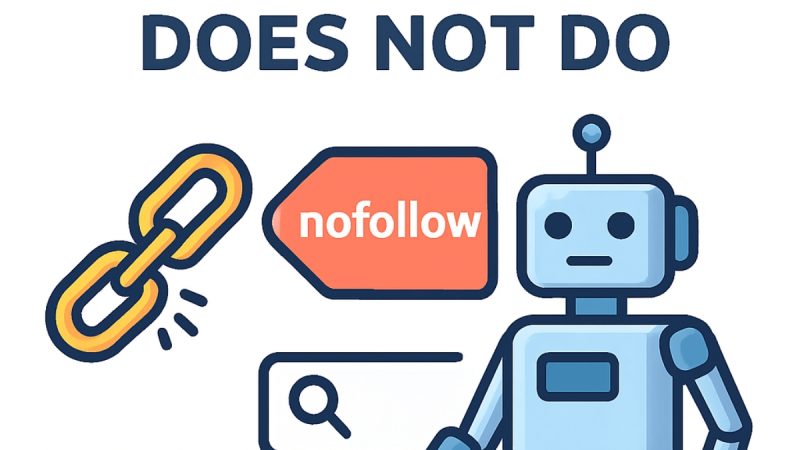
They are also not the right answer for most internal crawl or indexing problems. Google specifically advises using robots.txt disallow if you want to prevent Google from fetching certain pages and noindex if you want to prevent indexing. In other words, internal nofollow is not the preferred fix for those jobs.
What Advertisers Should Actually Do?
For advertisers, the practical rule is simple: do not reject a link opportunity just because it is nofollow, but do not evaluate it the same way you evaluate a premium followed editorial link.
A useful working model looks like this:
First, judge the placement by relevance, visibility, and audience fit. If the link appears on a page your target audience actually reads, the opportunity may still be worthwhile. Then ask why the link is qualified. Is it nofollow because the site uses that policy broadly? Is it sponsored because the placement is paid? Is it user-generated? Those details matter because they help define what kind of value the placement can realistically create. Google’s documentation on nofollow, sponsored, and ugc makes that distinction important.
If the only reason to buy or pursue the placement is the hope of direct ranking transfer, the value is weaker. If the placement also supports traffic, visibility, relevance, and broader search presence, it may still be a smart move.
What Publishers Should Actually Do?
For publishers, the better question is not whether nofollow is “good” or “bad.” The better question is whether links are being qualified correctly.
Google recommends rel="sponsored" paid links and rel="ugc" user-generated links. It also says it nofollow should be used when the more specific values do not apply and you do not want Google to associate your site with the linked page or crawl it from your page.
That means publishers should think of nofollow as part of correct implementation, not as a sign that the link automatically has no SEO value at all. The right goal is not to mark everything the same way. The goal is to use the correct qualifier for the correct context.
>>> READ MORE: Off Page SEO Checklist: What To Review, Build, And Improve
How This Plays Out on Different Page Types
The impact of a nofollow link can also depend on the page being linked to.
Blog posts
For informational content, a nofollow mention can still be valuable when it places the article in front of a relevant audience or on a page that may influence later citations. In this case, the SEO value is often broader and more indirect: exposure, discovery, and relevance first, with possible downstream benefits later.
Service pages
For service pages, the evaluation should usually be stricter. If a nofollow placement sits on a highly relevant page and can send qualified leads or high-intent visitors, it may still be worthwhile. But if you are comparing similar opportunities, a strong followed editorial link is usually the stronger SEO asset.
Category pages
For category pages, nofollow links can still support discovery and visibility, but they usually should not be the backbone of the strategy. Category pages tend to benefit most from strong site architecture, crawlable internal linking, and relevant external signals overall. Google’s documentation also notes that anchor text and links help both users and Google understand linked pages.
Common Mistakes to Avoid
One common mistake is treating every nofollow link as worthless. That is too blunt and does not reflect how Google describes nofollow today.
Another mistake is treating nofollow links as equal to followed editorial links in pricing, reporting, or campaign planning. That is also inaccurate. Qualified links can still matter, but they are not the same asset.
A third mistake is using internal nofollow to control crawl or index behavior. Google recommends other tools for that job.
A fourth mistake is qualifying links incorrectly. Paid links should generally use sponsored, user-generated links should generally use ugc, and nofollow should be used when the other values do not fit and you would rather not associate your site with the linked page or have it crawled from your page.
A Simple Working Framework
If you need a practical decision rule, use this one:
Treat strong followed editorial links as your clearest direct SEO asset. Treat nofollow links as a supporting SEO asset that can still matter when the placement is relevant, visible, credible, and useful beyond raw link equity. Treat sponsored and ugc As link qualifiers, you should use them correctly, not as shortcuts. And do not use internal nofollow as a substitute for proper crawl or indexing controls.
That framework is much more useful than asking whether nofollow links are simply good or bad.
Nofollow links can help SEO, but usually not in the same direct and dependable way as strong followed editorial links. Google treats nofollow as a hint, not an absolute rule, which means these links are not useless. At the same time, they should not be treated as the center of a ranking-first link strategy.
The better way to judge them is by role. Are they correctly qualified? Are they relevant to the page? Are they visible to the right audience? Can they support discovery, referral traffic, or broader visibility? When you evaluate nofollow links that way, the decision becomes much clearer.
At SEONetwork, we usually see stronger link strategies when teams stop sorting opportunities into “all valuable” or “all useless” buckets. Looking at nofollow links through the lens of intent, qualification, visibility, and realistic SEO value usually leads to better decisions than treating every link type the same way.
Check our Link Building Marketplace for the most balance and safest link building strategies.
FAQs
Do nofollow links pass PageRank?
Google does not frame nofollow links as standard editorial endorsements, and since 2019 it has treated nofollow, ugc, and sponsored as hints in Search rather than strict directives.
Are nofollow links good for SEO?
They can be useful, especially when they are relevant, visible, and part of a broader search strategy. They are usually less direct than strong followed editorial links, but they are not automatically worthless.
What is a nofollow link?
A nofollow link is a link marked with rel="nofollow", which Google says can be used when other rel values do not apply and you would rather Google not associate your site with, or crawl the linked page from, your site.
What does nofollow mean for internal links?
For internal crawl and indexing control, Google recommends using robots.txt disallow or noindex rather than relying on internal nofollow.
Should paid links use nofollow?
Google recommends rel="sponsored" for paid links, while also noting that nofollow remains acceptable if needed, though sponsored is preferred.

I’m Jackson Avery, and I have 5 years of experience in content SEO. At SEONetwork, I share practical SEO knowledge, insights, and content strategies to help readers better understand search intent, content optimization, and sustainable organic growth.