
An SEO slug is the part of a URL that tells users and search engines what a page is about in a short, readable format. When slugs are too long, too vague, or overloaded with keywords, they can make URLs harder to understand and less useful as part of a clean site structure. This SEONetwork article answers the question “what is an SEO slug,” explains why it matters for SEO, and shows how to write better slugs through clear examples and practical optimization best practices.
What Is an SEO Slug?
A simple definition
An SEO slug is the part of a URL that comes after the domain name and usually after any category or folder path. It describes the specific page in a short, readable way.
For example, in this URL:
https://example.com/blog/what-is-an-seo-slug
The slug is:
what-is-an-seo-slug
That final section is what helps identify the page topic more clearly.
Where the slug appears in a URL
A full URL usually has several parts:
- the domain
- the path or category
- the slug
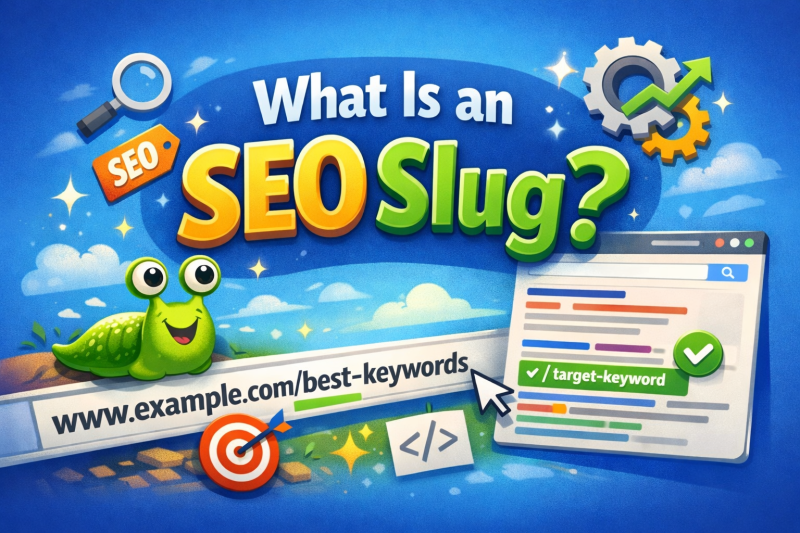
Using the same example:
- Domain:
example.com - Category path:
/blog/ - Slug:
what-is-an-seo-slug
The slug is usually the part you edit when publishing a page or post.
SEO slug vs full URL
A slug is not the same as a full URL.
- The URL is the complete web address
- The slug is only the last descriptive part of that address
- The slug is often where you make the URL cleaner and more relevant to the page topic
That difference matters because a page can sit within the same site structure while still having a better or worse slug.
Why Does an SEO Slug Matter?
It helps search engines understand page’s topic
A slug gives search engines an extra clue about what the page covers. It is not one of the biggest SEO factors, but it supports topical clarity.
A URL like:
/seo-slug-best-practices
is more helpful than:
/page-247
The first version gives context immediately. The second says almost nothing.
It makes URLs easier for users to read
A clean slug improves readability. When users see a URL in search results, a browser bar, or a shared link, they can usually tell what the page is about before clicking.
That makes the page look more trustworthy and more organized.
It supports a cleaner site structure
Good slugs are also part of good site hygiene. They make a site easier to manage over time, especially when:
- Multiple people publish content
- Pages need to be updated later
- Internal links need to stay clear
- Content categories continue to grow
Small structural improvements like this often matter more as a site scales.
>>> EXPLORE FURTHER: Buy Quality Backlinks, Buy Guest Posts & Backlink Services | SEONetwork
What Makes a Good SEO Slug?
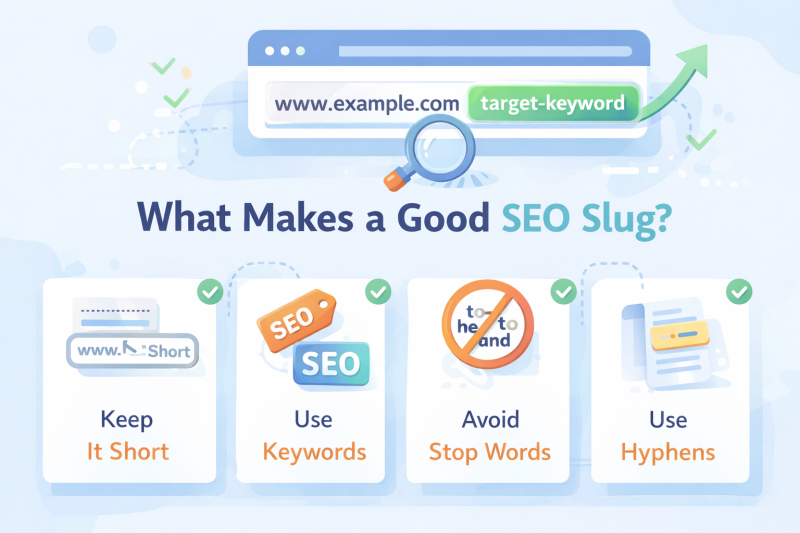
Keep it short and descriptive
A strong slug says what the page is about without trying to repeat the full title word for word.
For example, this article could have the title:
What Is an SEO Slug? Meaning, Examples, and Best Practices
But the slug only needs to be:
what-is-an-seo-slug
That is usually enough.
Use the main keyword naturally
If the primary keyword matches the page topic directly, it usually makes sense to include it in the slug.
In this case, what an SEO slug fits naturally is because the page is answering exactly that question.
The goal is not to force every keyword variation into the URL. The goal is to make the topic obvious.
Remove unnecessary words
Many slugs become weaker because they include words that do not add much value.
For example:
- Better:
seo-slug-best-practices - Worse:
the-most-helpful-and-complete-seo-slug-best-practices-guide
The second version is longer, heavier, and less useful.
Use hyphens and lowercase letters
The best format is usually simple:
- Use lowercase letters
- separate words with hyphens
- avoid unnecessary symbols
- Keep formatting consistent across the site
This improves readability and keeps URLs cleaner.
Common SEO Slug Mistakes to Avoid
Writing slugs that are too long
Long slugs often make URLs harder to read without adding real value. If the slug starts to feel like a sentence, it is probably too long.
Stuffing too many keywords
This is one of the most obvious mistakes in slug SEO. A slug should support the page topic, not try to rank for every possible keyword variation.
A slug like this is a bad idea:
/seo-slug-slug-seo-slug-seo-wordpress-yoast-seo-slug
It looks forced and low quality.
Using dates, numbers, or vague labels
Some pages need dates, but most do not. Random numbers and vague words usually make slugs weaker, not stronger.
Examples of weak slugs:
/post-441/seo-guide-final-new/article-about-url-things
None of these helps users or search engines much.
Changing a live slug without a redirect
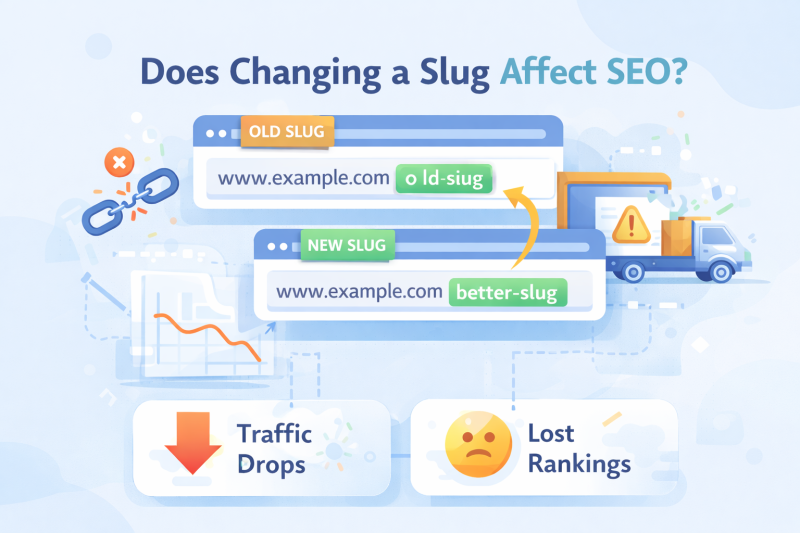
If a page is already indexed and has traffic or backlinks, changing the slug changes the URL. If that happens without a redirect, it can create broken links and lost visibility.
That is why slug changes should be handled carefully.
How to Create an SEO-Friendly Slug
Start with the actual page topic
Before writing the slug, define the main purpose of the page.
Ask:
What is this page really about?
If the answer is “what is an SEO slug,” then the slug should stay close to that topic.
Cut it down to essential words
Once you know the core topic, remove anything unnecessary.
For example, a title might be:
What Is an SEO Slug and Why Does It Matter for SEO?
But the slug can simply be:
what-is-an-seo-slug
That version is clearer and cleaner.
Check whether it still makes sense on its own
A good test is to look at the slug alone. If someone saw only that part of the URL, would they still understand the page topic?
If yes, it is probably doing its job.
Match the slug to page intent
A slug should reflect what the page is actually trying to do.
- Informational page: keep the slug educational and topic-focused
- Commercial page: make the slug align with the offer or solution
- Category page: keep the slug broad and clear
This helps maintain consistency between the URL and the page itself.
SEO Slug Examples: Good vs Bad
Good slug examples
These examples are clear and useful:
what-is-an-seo-slugseo-slug-best-practiceswordpress-seo-slug-settingshow-to-write-url-slugs
They are readable, descriptive, and aligned with real page topics.
Bad slug examples
These examples are weaker:
post-2389this-is-my-full-blog-title-about-seo-slugs-and-wordpress-settingsseo-slug-slug-seo-yoast-seo-slug-wordpressuntitled-page-final-3
These either say too little, say too much, or look obviously over-optimized.
Why the better version works
The stronger versions work because they do three things well:
- they make the topic easy to understand
- they remove clutter
- they look natural instead of manipulated
That balance matters more than squeezing in every keyword.
Does Changing a Slug Affect SEO?
When updating a slug makes sense
Sometimes changing a slug is worth it, especially if:
- The original slug is vague
- The page topic has changed
- The URL includes messy wording or random numbers
- The site structure has been improved
In those cases, a cleaner slug may improve usability and clarity.
Risks of changing an existing slug
The main risk is not the new slug itself. The risk is losing the value attached to the old URL.
That can affect:
- indexed pages
- internal links
- backlinks
- user access
So slug edits should be treated as URL changes, not just cosmetic updates.
Why redirects matter
If a live page gets a new slug, the old URL should redirect to the new one. That helps preserve continuity for both users and search engines.
Without that step, even a better slug can cause unnecessary problems.
SEO Slug Best Practices for Different Page Types
Blog posts
For blog content, keep the slug focused on the primary topic or main query.
Example:
/what-is-an-seo-slug
That is usually better than turning the entire title into a long URL.
Product pages
For products, include the product name or key descriptor clearly, but avoid bloated URLs.
Example:
/wireless-keyboard
That is cleaner than adding extra modifiers that do not help users.
Category pages
For categories, clarity is more important than clever wording.
Examples:
/technical-seo
/link-building
These help users understand the section immediately.
WordPress, Yoast, and SEO Slug Settings
How slug SEO works in WordPress
If you use WordPress, you can usually edit the slug before publishing a page or post. That is why terms like slug SEO WordPress often come up among content teams and site managers.
In practice, WordPress simply gives you a place to control the URL more clearly. The SEO principle stays the same: keep the slug relevant, readable, and clean.
Does Yoast SEO change the slug strategy?
If you use Yoast, you may also see people search for Yoast SEO slug advice. Yoast can help flag URL issues or encourage cleaner optimization, but it does not change the core logic of slug writing.
A good slug is still a good slug whether you use Yoast, another plugin, or no plugin at all.
What matters more than the tool
The tool matters less than the decision behind it. Whether you are editing a slug in WordPress, reviewing it in Yoast, or managing it manually, the real questions stay the same:
- Is it clear?
- Is it relevant?
- Is it shorter than it needs to be?
- Does it match the page topic?
That is what strong SEO slug best practices usually come down to.
FAQ About SEO Slugs
What is the difference between a slug and a URL?
A URL is the complete web address. A slug is one part of that URL, usually the final descriptive section.
Should an SEO slug include the exact keyword?
It can when the keyword fits naturally, but it does not need to force every exact-match variation into the URL.
How long should an SEO slug be?
There is no perfect number, but shorter and clearer is usually better.
Can changing a slug hurt SEO?
It can if the page is already live and you change the URL without proper redirects.
Is WordPress slug SEO different from normal slug SEO?
Not really. WordPress simply makes it easier to edit the slug. The core SEO logic stays the same.
An SEO slug is a small part of on-page SEO, but it is still worth getting right. Clean slugs help users understand the page, help search engines interpret the topic more clearly, and make a site easier to manage over time.
They are not a replacement for strong content, useful structure, or real authority. But they are one of those details that quietly support better SEO when handled well.
If you are reviewing on-page fundamentals, fixing messy slugs is a practical place to start. And once the page itself is structured clearly, the next step is making sure the right pages gain the right visibility. At SEONetwork, that often means helping teams research and compare backlink opportunities more clearly, so strong pages have a better growth path.
>>> YOU MAY ALSO LIKE:
- How Important Is Page Speed for SEO in 2026?

I’m Jackson Avery, and I have 5 years of experience in content SEO. At SEONetwork, I share practical SEO knowledge, insights, and content strategies to help readers better understand search intent, content optimization, and sustainable organic growth.